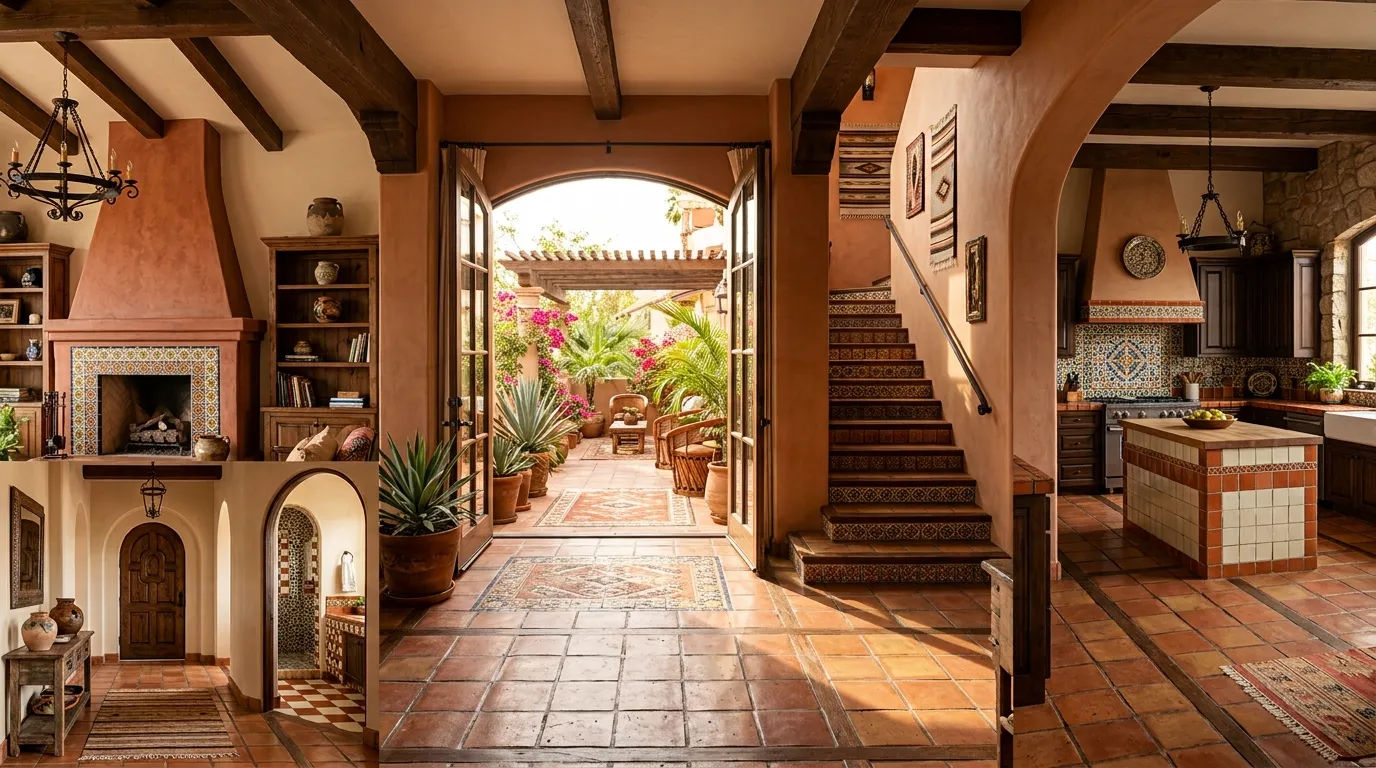
Saltillo Tile brings warmth, earthy color, and handcrafted character to interiors and outdoor spaces. Made from natural terracotta, traditional Saltillo tile has irregular edges, tonal variation, and a lived-in surface that can make new spaces feel established. It works especially well with Mexican, Spanish Colonial, Southwestern, rustic, farmhouse, and warm eclectic interiors.
Saltillo also needs practical planning. Porous terracotta requires appropriate sealing, regular care, and thoughtful placement. Busy kitchens need protection from spills, bathrooms need careful moisture management, and outdoor installations need materials suited to local weather. These ideas show where Saltillo works best, how to style it, and where homeowners should avoid common installation mistakes.
Saltillo Tile Ideas for Timeless Mexican Style
1. Classic Saltillo Flooring
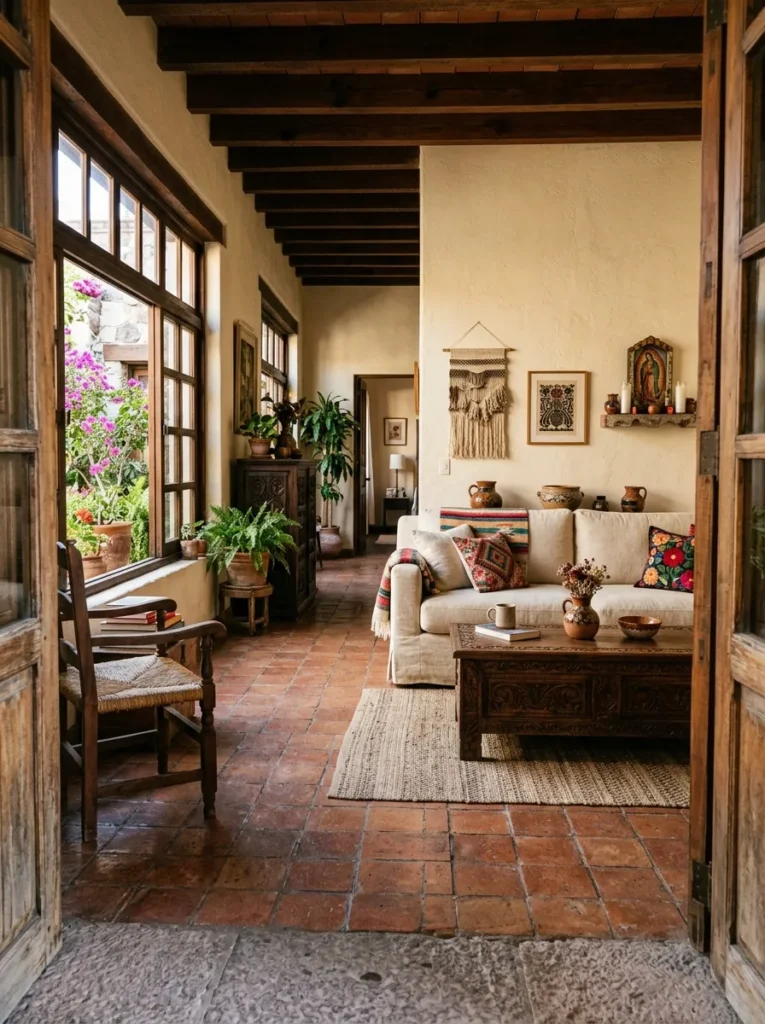
- Creates warm terracotta foundation
- Works across large rooms
- Suits rustic Mexican interiors
- Seal before heavy use
- Sweep abrasive dirt regularly
Classic Saltillo flooring creates strongest traditional foundation for Mexican-inspired rooms. Its natural color variation works beautifully with cream walls, wood furniture, woven textiles, and wrought iron. Use it across living rooms, dining areas, kitchens, or connected spaces when wanting continuous visual warmth. Proper sealing helps protect porous terracotta from stains and everyday wear. Sweep regularly because grit can scratch softer surfaces over time. Expect natural variation between tiles rather than treating color differences as flaws. For an elevated flow throughout your home, take a look at these inspiring Authentic Mexican Home Decor for Timeless Style.
2. Saltillo Kitchen Floor
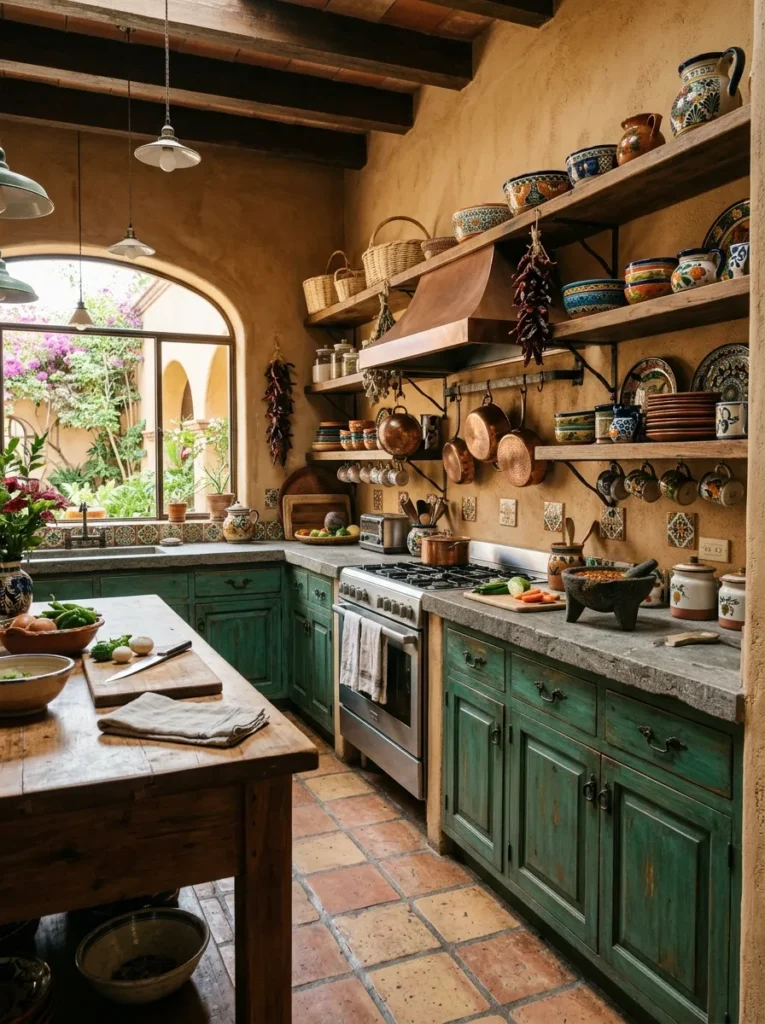
- Adds warmth beneath cabinets
- Works with wood cabinetry
- Hides minor everyday dirt
- Seal against kitchen spills
- Clean with gentle products
Saltillo kitchen floors pair naturally with painted cabinets, natural wood, copper fixtures, and Talavera accents. Their earthy color can soften bright kitchens while adding visual connection to Mexican-inspired materials. Use appropriate penetrating sealer before regular kitchen use, especially around cooking and dining zones. Wipe spills quickly because unsealed terracotta can absorb liquids. Avoid harsh cleaners that can damage finish. A runner near sink or prep area can provide extra comfort and protection.
3. Saltillo Bathroom Floor
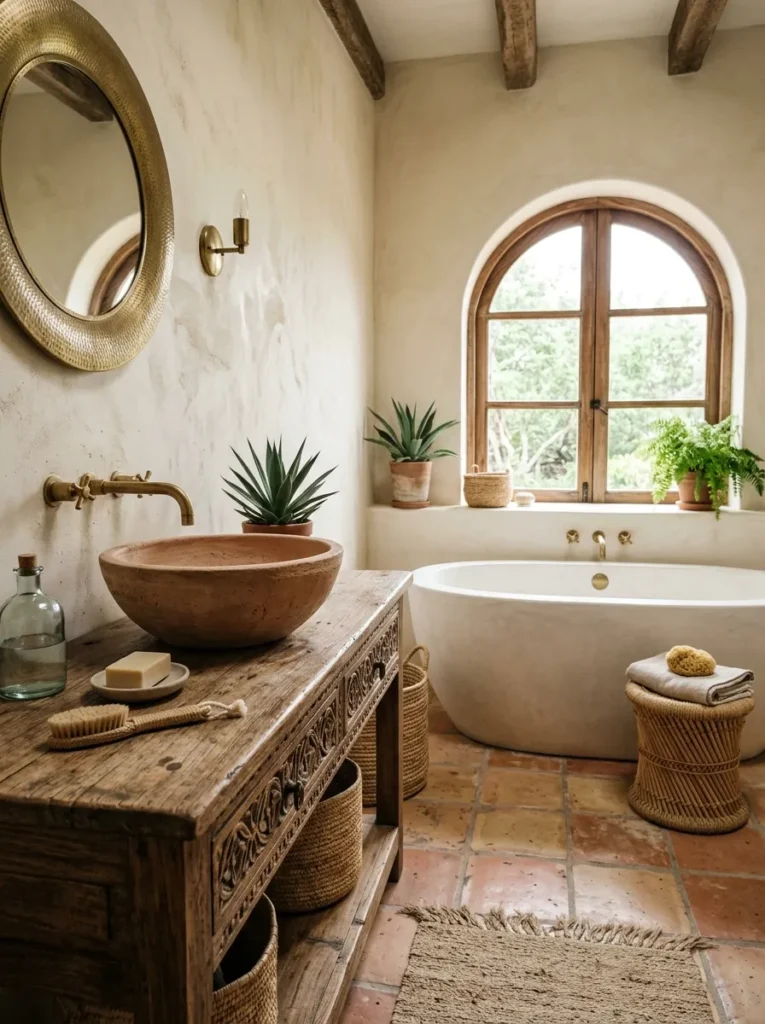
- Creates spa-like earthy warmth
- Works with plaster walls
- Complements colorful tile
- Use moisture-appropriate sealing
- Keep surfaces clean
Saltillo can create beautiful bathroom flooring when installation and sealing are handled correctly. Pair it with white plaster-style walls, wood vanities, brass hardware, or colorful Mexican tile for relaxed character. Because bathrooms experience frequent moisture, choose appropriate sealing system and ensure subfloor and grout are properly installed. Keep standing water off floor whenever possible. Avoid overly polished finishes that may become slippery when wet. Test maintenance requirements before committing to large bathroom areas.
4. Saltillo Patio Flooring
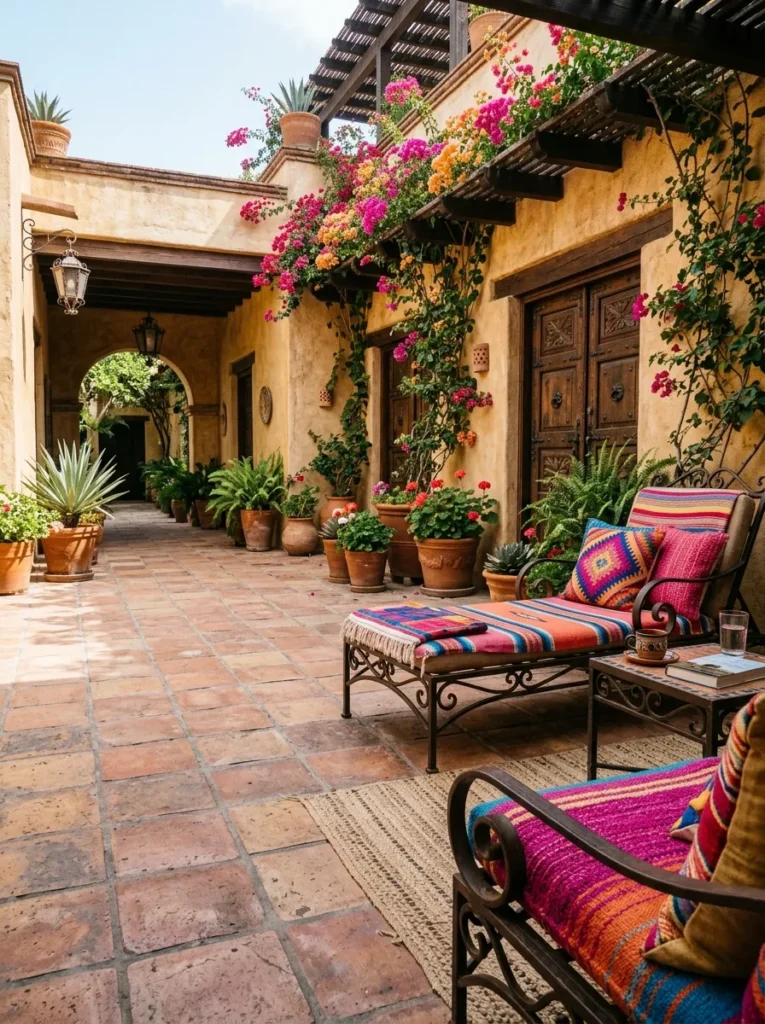
- Extends indoor warmth outdoors
- Works with stucco walls
- Complements wrought iron furniture
- Choose exterior-rated installation methods
- Reseal as weather demands
Saltillo patio flooring can connect outdoor living areas with Mexican and Southwestern architecture. Terracotta works especially well beside stucco, clay pots, wood beams, colorful textiles, and iron furniture. Outdoor installation requires proper drainage and climate consideration because freeze-thaw conditions can damage terracotta. Use appropriate exterior-rated installation materials and sealing products. Sweep leaves and debris regularly to prevent staining. In severe climates, choose tile specifically suitable for local conditions.
5. Saltillo Entryway Floor

- Creates welcoming first impression
- Works with wood doors
- Suits narrow foyers
- Use protective entry mats
- Clean grit frequently
Saltillo makes entryways feel warm before visitors even reach living spaces. Pair floor with carved wood console, wrought iron mirror, woven basket, or Talavera pottery for cohesive Mexican character. Place durable mats near exterior doors to capture dirt and moisture before they reach tile. Sweep frequently because entry grit can cause surface wear. For narrow entries, keep wall decor simple so natural tile variation remains visible.
6. Saltillo Tile Backsplash
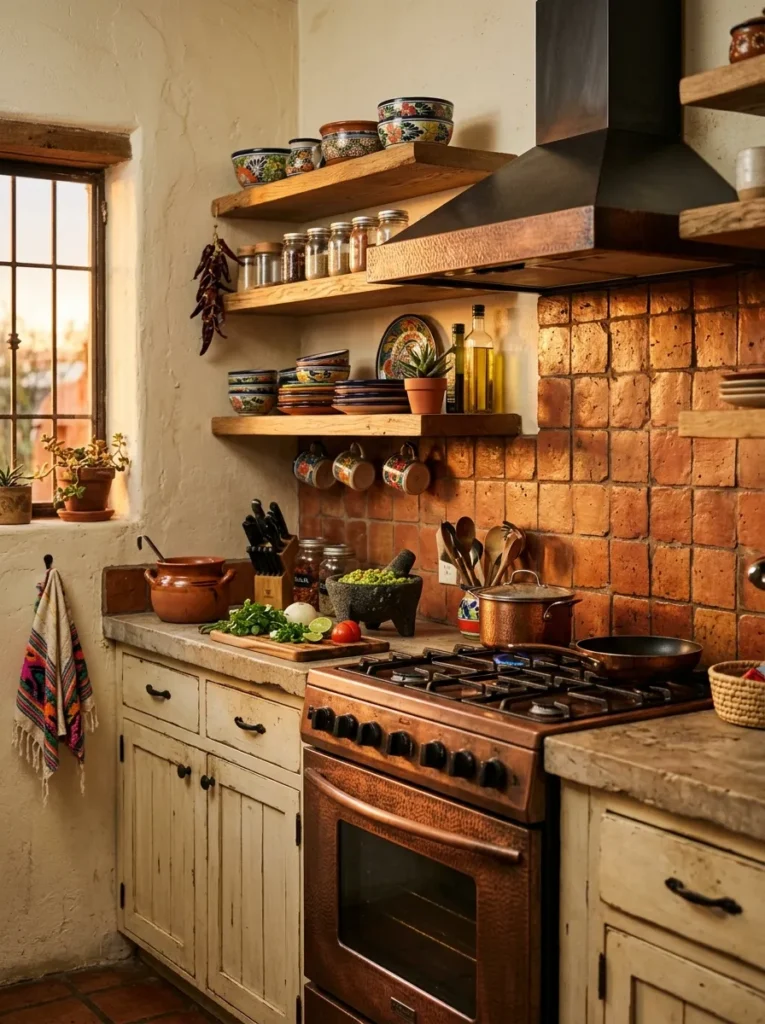
- Adds handcrafted kitchen texture
- Works behind open shelving
- Complements neutral cabinetry
- Seal against grease exposure
- Clean grout gently
Saltillo backsplash tile brings earthy color upward instead of limiting terracotta to floors. Use it behind range, sink, or open shelving where warm texture can become focal point. Pair with cream, olive, wood, copper, or muted turquoise cabinetry. Because kitchen backsplashes encounter grease and moisture, choose appropriate sealing and grout products. Avoid abrasive scrubbing that can wear textured surfaces. Smaller Saltillo-style tiles can create more manageable visual rhythm in compact kitchens.
7. Saltillo Stair Treads
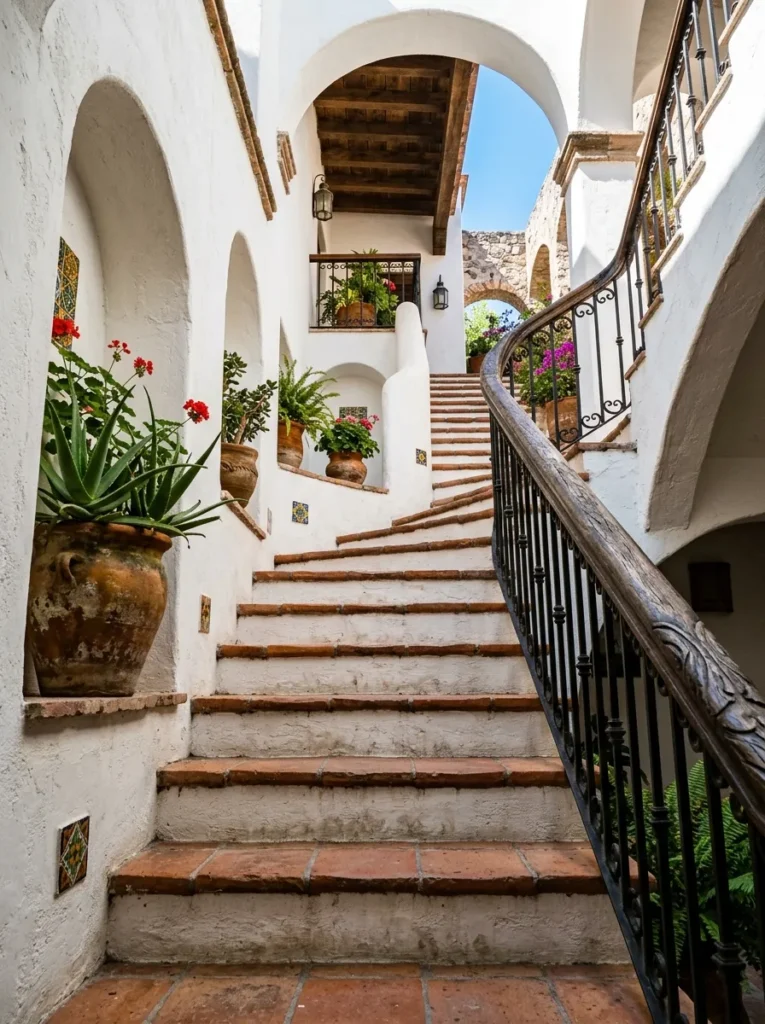
- Adds warm architectural detail
- Works with stucco homes
- Creates Spanish character
- Use secure installation methods
- Add suitable edge protection
Saltillo stair treads can turn ordinary stairs into architectural feature. They work especially well with white plaster walls, dark wood railings, wrought iron balusters, and terracotta flooring. Stair surfaces need extra attention because edges experience repeated foot traffic. Use properly installed tread pieces with secure nosing and suitable traction. Avoid highly polished surfaces where slipping could become concern. Match tread color with surrounding floor when wanting seamless appearance.
8. Saltillo Fireplace Surround

- Creates cozy focal point
- Works with plaster walls
- Complements rustic mantels
- Verify heat-safe installation
- Keep grout clean
Saltillo tile can bring earthy warmth around fireplace without requiring elaborate stonework. Use it as surround, hearth, or decorative border depending on fireplace design and manufacturer requirements. Pair with reclaimed wood mantel, iron screen, woven basket, or simple ceramic accessories. Heat exposure means installation materials must be appropriate for fireplace use. Keep grout and tile free from soot buildup. If fireplace surround already has strong color, limit additional patterns nearby.
9. Saltillo Kitchen Island
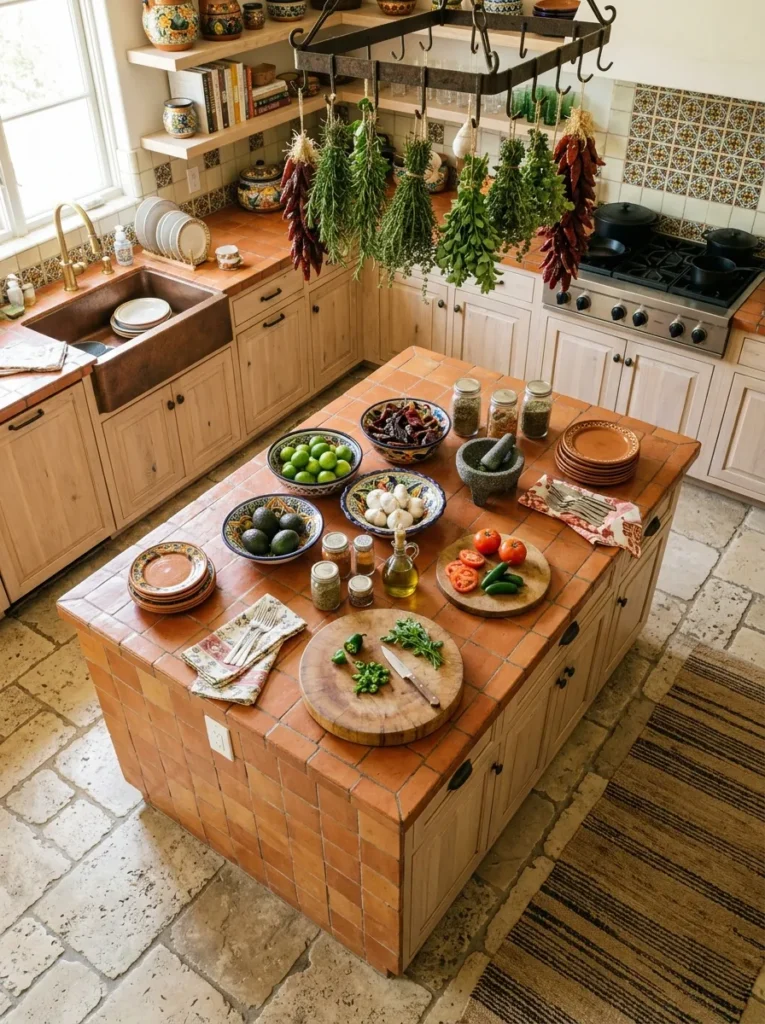
- Adds handmade visual interest
- Works with painted cabinetry
- Creates strong focal point
- Protect high-touch surfaces
- Use sealed tile carefully
Saltillo tile can cover a kitchen island base or decorative side panel, giving otherwise plain cabinetry stronger Mexican character. This works especially well when main cabinets stay neutral and island becomes statement feature. Use consistent tile scale and carefully plan corners before installation. Sealed surfaces make maintenance easier, but grout still needs attention around high-use areas. Keep countertops simple so terracotta detail remains focal point. This idea works particularly well in large kitchens with central islands. You can easily elevate this aesthetic by pairing these accents with our curated Mexican Kitchen Backsplash Ideas.
10. Saltillo Tile Accent Wall
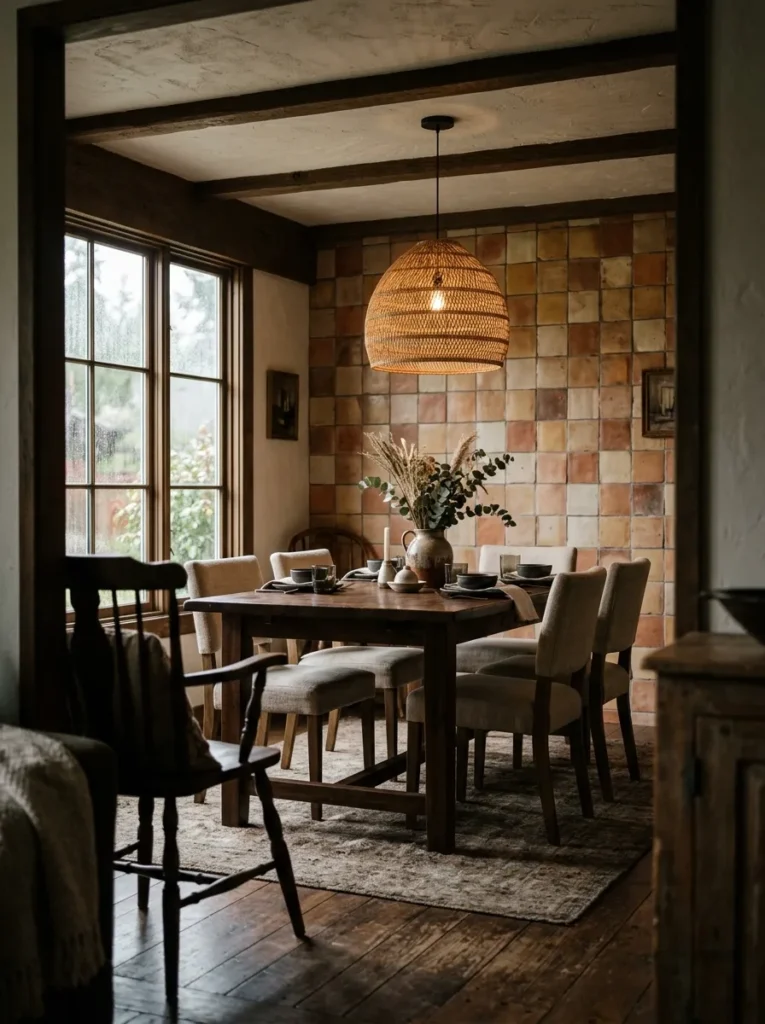
- Adds earthy architectural texture
- Works behind dining tables
- Creates strong focal point
- Use balanced surrounding colors
- Dust textured surfaces gently
An accent wall covered in Saltillo can create major impact without installing tile throughout entire room. Use it behind dining table, fireplace, kitchen island, or entry console where wall naturally serves as focal point. Keep surrounding walls and furniture relatively quiet to prevent visual overload. Terracotta pairs beautifully with cream, warm white, olive, wood, and charcoal. Plan electrical outlets and wall fixtures before installation. Regular gentle dusting keeps textured tile looking clean.
11. Saltillo Shower Floor
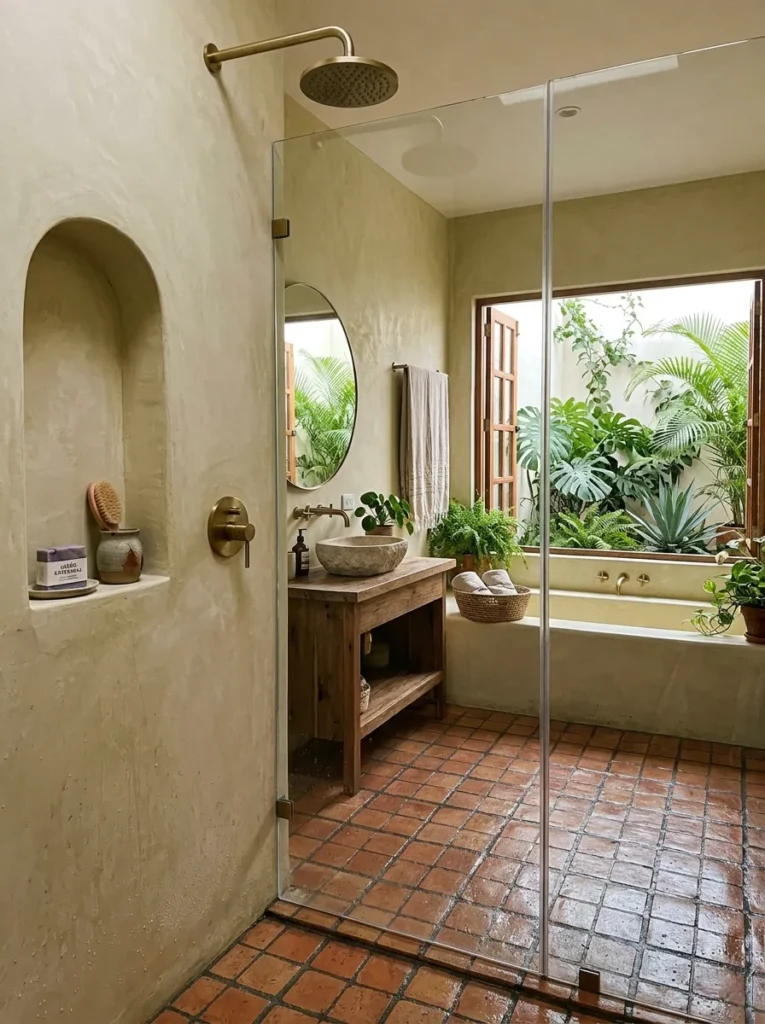
- Creates rustic bathroom character
- Works with earthy palettes
- Requires careful waterproofing
- Choose suitable tile treatment
- Maintain grout regularly
Saltillo shower floors require more technical care than decorative wall applications. Traditional porous terracotta is not automatically suitable for constantly wet environments, so installation must account for waterproofing, drainage, sealing, slip resistance, and manufacturer guidance. For homeowners wanting same visual effect with less maintenance, Saltillo-look porcelain can provide easier bathroom performance. If using genuine Saltillo, follow professional installation recommendations closely. Keep grout clean and inspect joints regularly for moisture-related problems.
12. Saltillo Outdoor Flooring
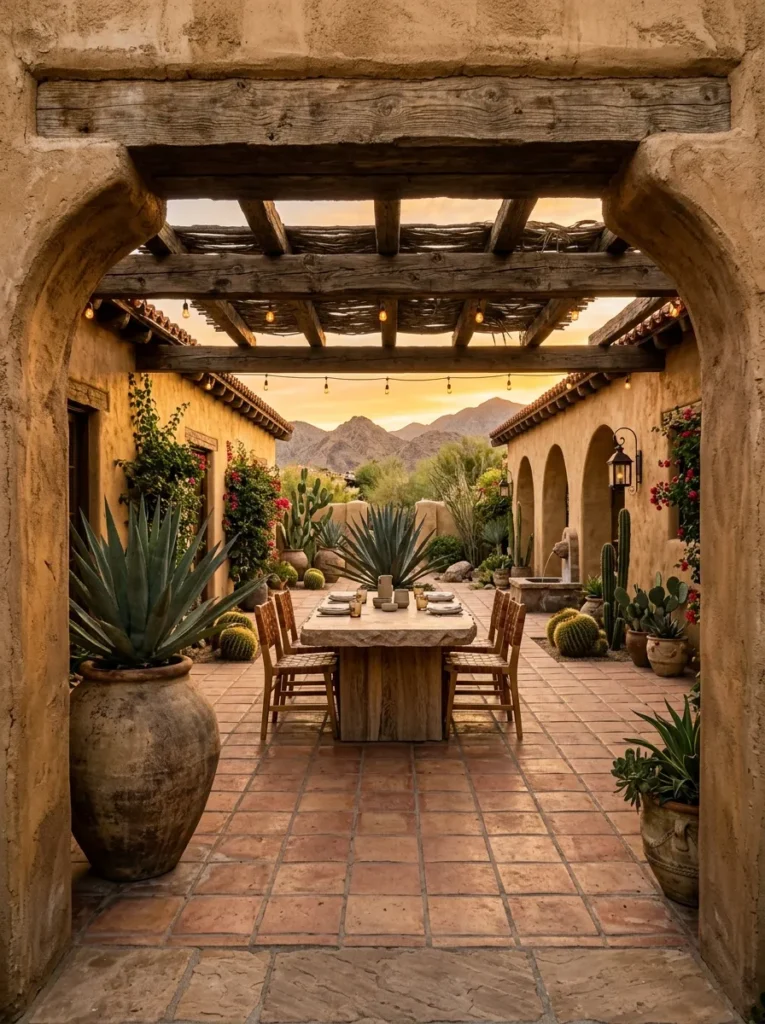
- Works around pool areas
- Complements desert landscaping
- Creates earthy outdoor character
- Check climate suitability first
- Maintain protective sealer
Outdoor Saltillo flooring works well around courtyards, patios, garden seating areas, and covered outdoor kitchens when climate allows. Its warm terracotta color complements cactus, agave, stone, stucco, and wrought iron. Before installation, confirm tile and installation system are appropriate for local weather. Freeze-prone climates may require different material. Keep drainage paths clear and inspect sealer periodically. Outdoor rugs should be breathable and suitable for terracotta so trapped moisture does not cause problems.
13. Saltillo Tile Border
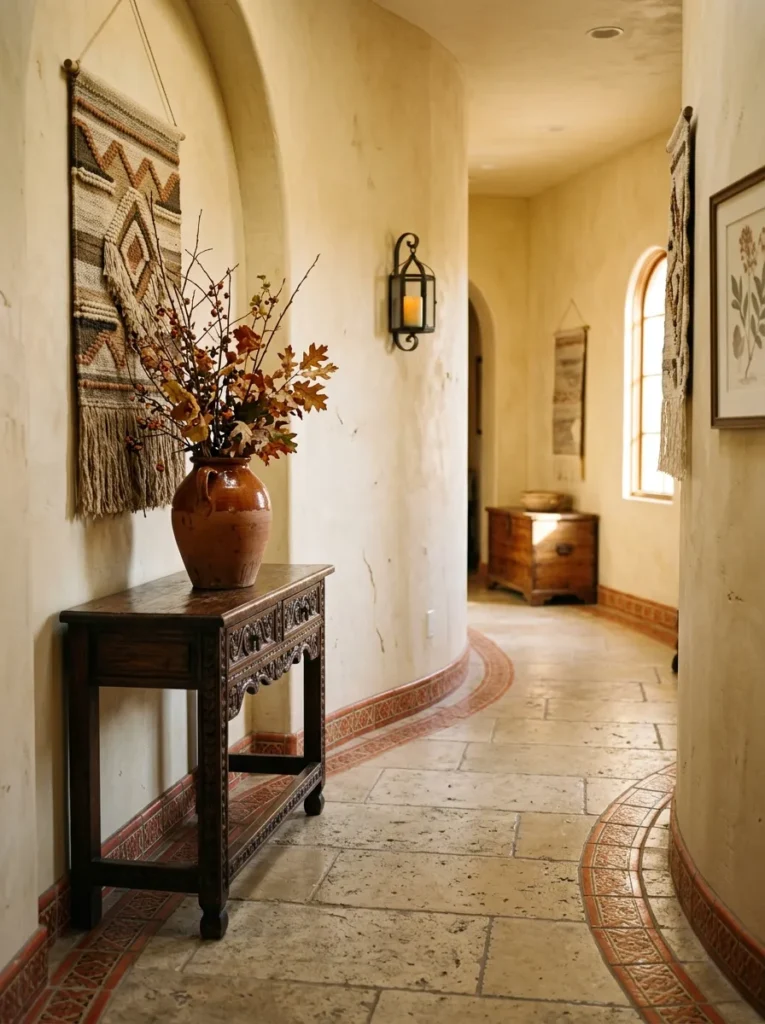
- Defines large flooring areas
- Adds decorative transition
- Works around rooms
- Combines with plain tiles
- Keep border proportions balanced
Saltillo borders provide a way to introduce terracotta without covering an entire floor. Use border strips around larger rooms, between materials, or around patios to visually define zones. Pair with cream, beige, stone, or wood-look flooring for warm contrast. Avoid borders that are too narrow to read clearly from normal viewing distance. Plan transitions before installation so pattern lines align with doors and furniture. This option can also reduce material costs compared with full Saltillo flooring.
14. Saltillo Checkerboard Pattern
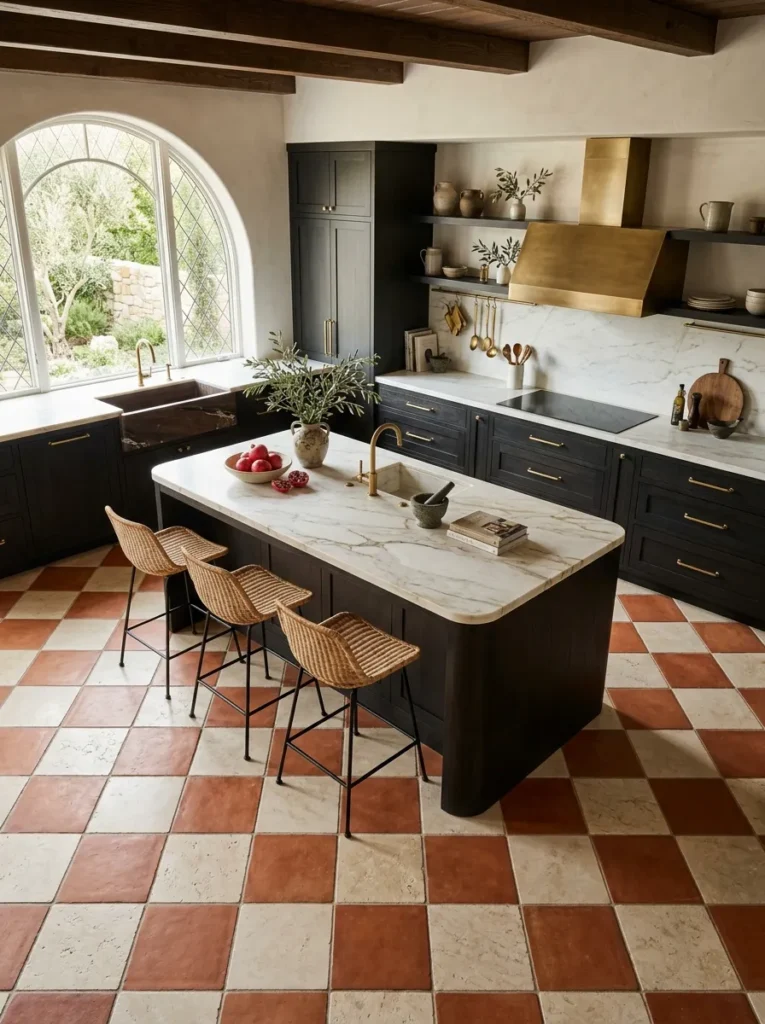
- Creates classic graphic contrast
- Works in kitchens
- Suits Spanish-inspired rooms
- Use contrasting neutral tiles
- Seal both surfaces appropriately
Checkerboard flooring gives Saltillo a more structured appearance while retaining handmade terracotta warmth. Pair warm terracotta squares with cream, off-white, or stone-colored tiles for balanced contrast. Use larger squares in spacious rooms and smaller patterns where scale feels appropriate. Keep cabinetry and furnishings relatively simple because checkerboard already creates strong visual movement. Seal materials according to their individual requirements. This pattern works especially well in kitchens, mudrooms, entryways, and dining spaces.
15. Saltillo Tile Rug
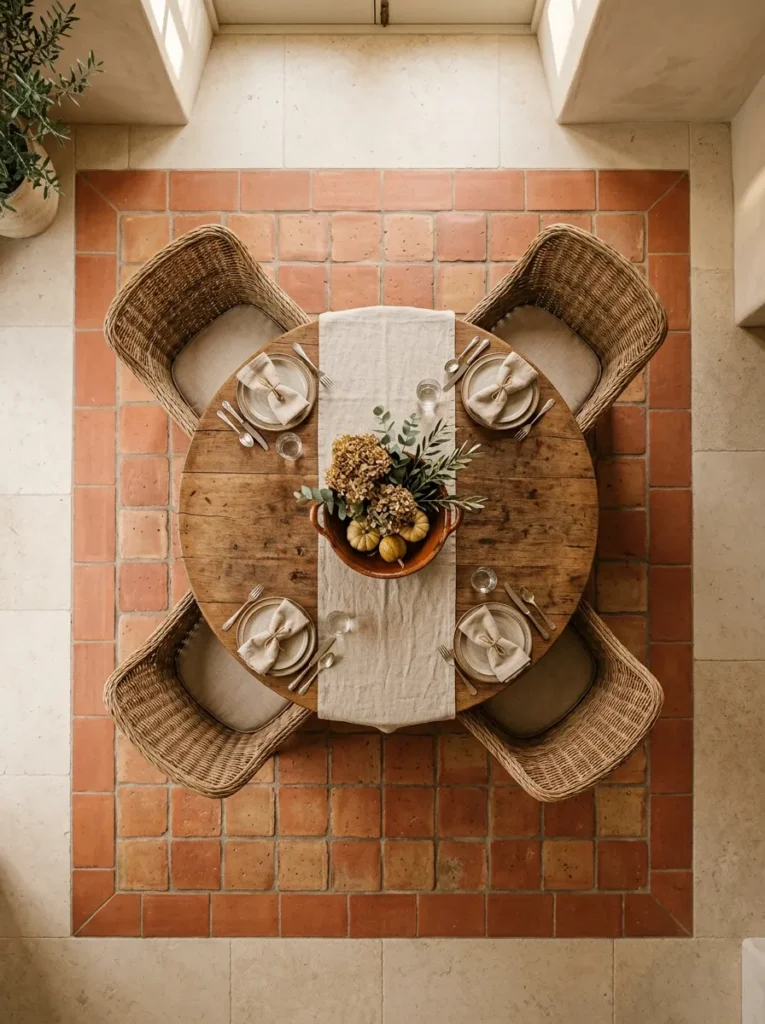
- Creates decorative floor centerpiece
- Defines dining areas
- Works in open layouts
- Plan borders before installation
- Keep furniture proportions balanced
A Saltillo tile rug creates appearance of area rug through patterned tile border or contrasting arrangement. It works beautifully beneath dining tables, kitchen islands, or seating zones where open-plan rooms need visual definition. Keep border dimensions proportional to furniture so design does not look disconnected. Use simple surrounding flooring to make decorative section stand out. Plan tile layout carefully before installation because pattern alignment affects overall appearance. This approach offers decorative impact without fabric maintenance. Looking to complete your seasonal home makeover? Discover our handpicked Talavera Pottery Decor Ideas for more elevated decor tips.
16. Sealed Saltillo Flooring
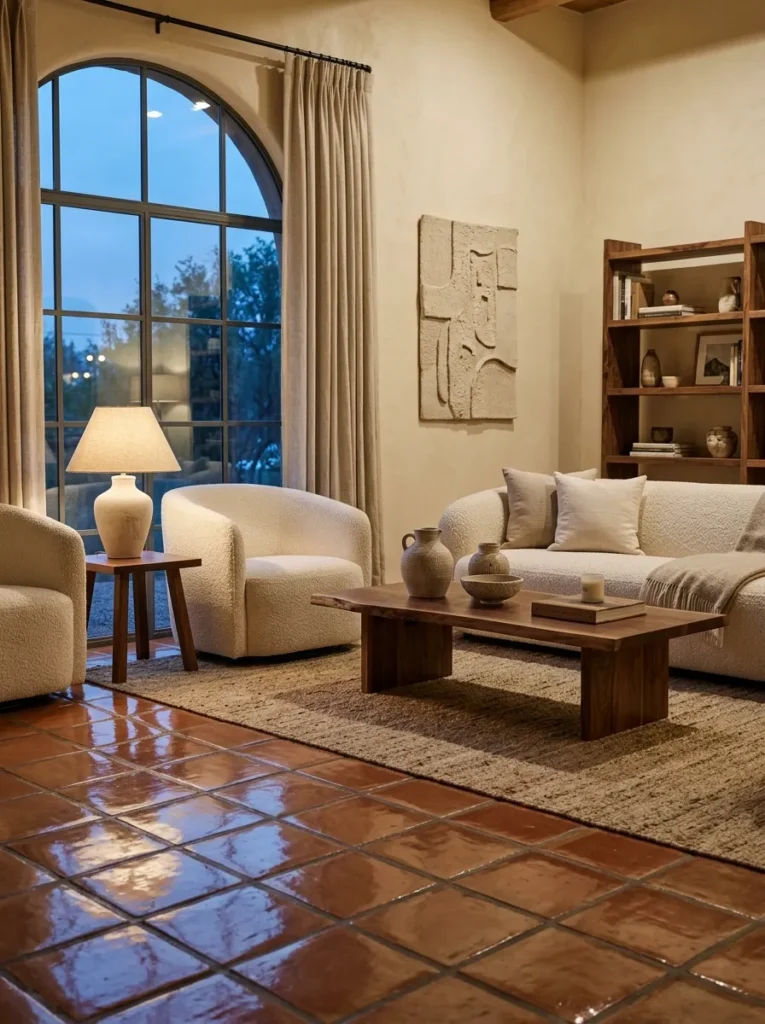
- Protects porous terracotta surfaces
- Helps resist everyday stains
- Works in busy homes
- Reapply sealer when needed
- Follow product care instructions
Sealing makes Saltillo much more practical for everyday homes, especially kitchens, entryways, dining areas, and high-traffic spaces. Different sealers create different appearances, from natural matte finish to deeper color enhancement. Choose product designed specifically for terracotta and follow application instructions carefully. Avoid assuming one sealing schedule works for every home because traffic, moisture, and product type vary. Clean using compatible products to preserve protective finish. Test maintenance routine in small area first.
17. Hand Painted Saltillo

- Adds one-of-a-kind personality
- Works as decorative flooring
- Great for small areas
- Protect painted surfaces carefully
- Keep surrounding decor simple
Hand-painted Saltillo can turn traditional terracotta into statement artwork. Painted motifs can work in entryways, kitchen borders, small patios, or decorative floor sections where fewer tiles make maintenance easier. Choose patterns that connect with existing Mexican textiles, ceramics, or artwork. Painted surfaces may require additional care depending on finish and traffic. Avoid placing abrasive furniture directly over decorative areas. In high-traffic rooms, consider Saltillo-look porcelain with printed pattern for easier upkeep.
18. Rustic Saltillo Terracotta
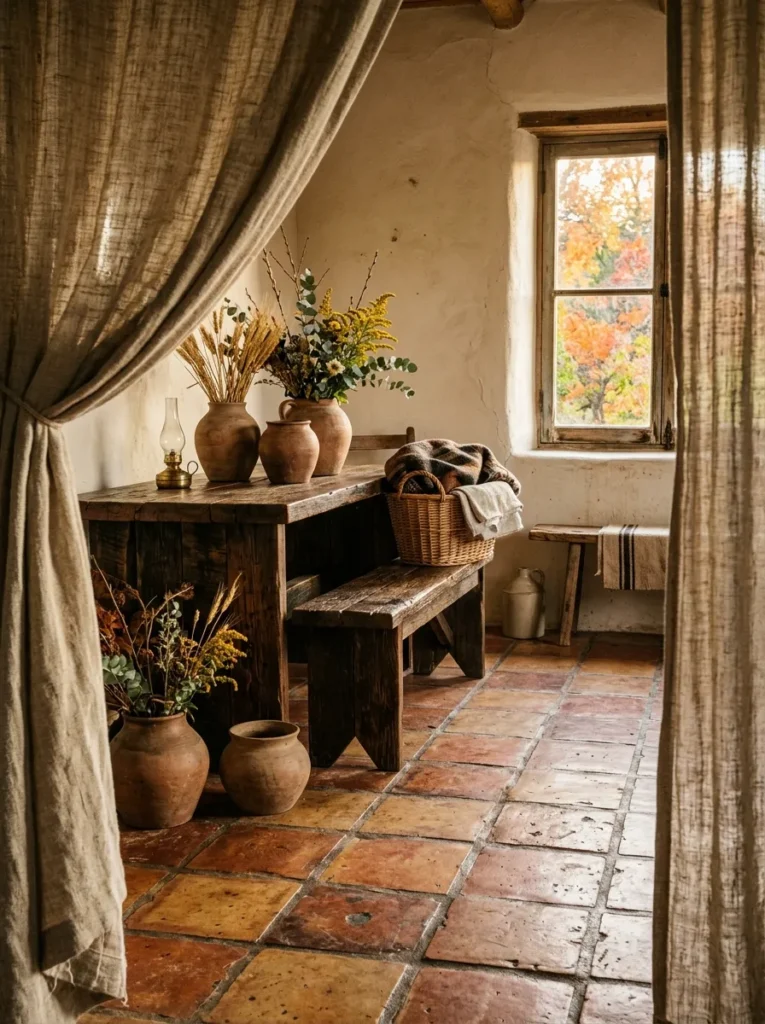
- Embraces natural tile variation
- Works with reclaimed wood
- Great for rustic homes
- Accepts aged imperfections beautifully
- Sweep and mop gently
Rustic Saltillo celebrates irregular edges, tonal variation, surface marks, and handmade character. Instead of trying to make every tile look identical, build room around natural differences. Pair flooring with reclaimed wood, linen, wrought iron, clay pottery, and warm plaster walls. This approach works especially well in rustic, hacienda, Southwestern, and Mediterranean-inspired interiors. Use gentle cleaning products and avoid aggressive scrubbing. If existing tile has small imperfections, embrace them as part of its character rather than replacing every piece.
Saltillo Tile FAQ
1. What is Saltillo Tile?
Saltillo Tile is traditional terracotta tile associated with Saltillo, Mexico. Genuine pieces are typically handmade and known for natural color variation, irregular edges, and warm earthy tones.
2. Is Saltillo Tile good for kitchens?
Yes, when properly installed and sealed. It works beautifully with wood cabinets, colorful tile, copper, and neutral countertops, but spills should be cleaned promptly.
3. Can Saltillo Tile be used outdoors?
It can work outdoors in suitable climates and with proper installation. Freeze-thaw exposure, drainage, sealing, and local weather conditions should be considered before choosing genuine terracotta.
4. Does Saltillo Tile need sealing?
Usually, yes. Genuine Saltillo is porous and benefits from an appropriate sealer that helps protect against stains and moisture. Follow specific sealer and tile-care instructions.
5. Is Saltillo Tile suitable for bathrooms?
It can be used in some bathroom applications with proper waterproofing and sealing. Shower floors require extra care, so Saltillo-look porcelain may offer easier maintenance.
6. How do you clean Saltillo Tile?
Sweep or vacuum gently to remove grit, then use a cleaner compatible with sealed terracotta. Avoid harsh chemicals, abrasive tools, and excessive water.
Let Terracotta Bring Warmth Home
Saltillo works because it does not try to look perfect. Natural variation, handmade edges, warm terracotta color, and small surface differences give rooms character that manufactured materials often struggle to recreate. A classic floor can anchor entire home, while smaller applications can add warmth without major renovation.
Start with one area that needs more personality. Kitchen floor can connect wood cabinetry with colorful pottery. Entryway can use Saltillo border or tile rug. Fireplace surround can add rustic warmth. Outdoor patio can pair terracotta with cactus, agave, wrought iron, and stucco.
Most important, choose Saltillo based on real life. Seal high-use areas, protect exposed surfaces, plan moisture carefully, and consider Saltillo-look alternatives where maintenance would become difficult. Timeless style works best when it can handle everyday living.
Subscribe to our weekly newsletter for more home decor inspiration, DIY tips, and styling advice.