
Mexican interior design is moving beyond obvious themed rooms. Current spaces mix warm terracotta, handmade tile, natural wood, woven fibers, artisan pottery, folk art, and modern furniture in ways that feel personal rather than overly decorated. The strongest rooms use Mexican materials and colors as part of everyday living, not as a costume.
These trends can work across apartments, rentals, suburban homes, and larger hacienda-style properties. Some require renovation, while others need only paint, textiles, lighting, or ceramics. Best approach depends on room size, budget, existing architecture, and how much color you want. Use one or two strong elements first, then build layers around them.
Mexican Interior Design Trends Worth Trying
1. Warm Terracotta Walls
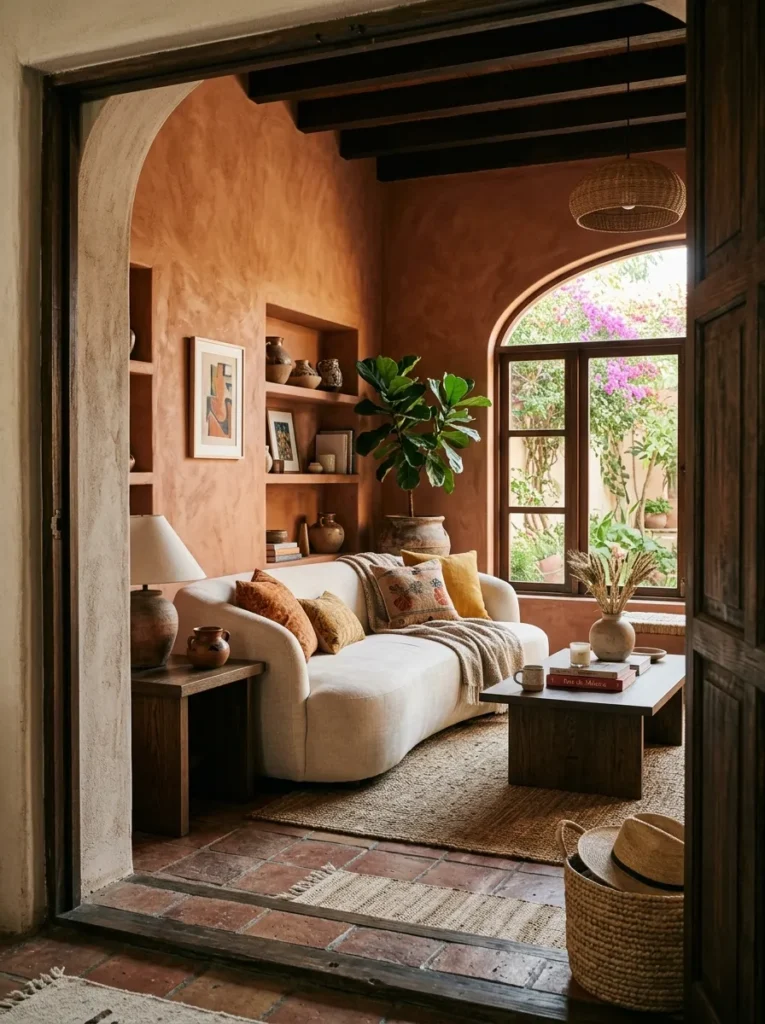
- Creates earthy visual warmth
- Works in living rooms
- Great with cream furniture
- Test paint under daylight
- Touch up scuffs easily
Warm terracotta walls give room immediate Mexican character while remaining surprisingly versatile. Use clay, burnt orange, cinnamon, or muted adobe shades behind sofas, dining areas, or beds. Pair strong walls with cream, natural wood, woven fibers, and aged metals to keep room balanced. Test paint samples under morning and evening light because terracotta can appear dramatically different throughout day. For smaller rooms, use terracotta on one accent wall instead of all four. To create a seamless decorative transition across your living areas, pair this look with our favorite Mexican Home Decor on a Budget.
2. Earthy Neutral Palettes

- Creates calm visual foundation
- Works in small spaces
- Great with colorful accents
- Layer beige and cream
- Refresh textiles seasonally
Earthy neutral palettes let handmade Mexican materials become focal points without making room feel busy. Combine sand, cream, warm beige, taupe, clay, and natural wood. Then introduce stronger color through pottery, pillows, rugs, or artwork. This approach works especially well in apartments and smaller rooms where too many saturated colors can feel overwhelming. Vary texture rather than adding more colors. Linen, jute, plaster, wood, and ceramic can keep neutral room visually rich.
3. Bold Color Accents
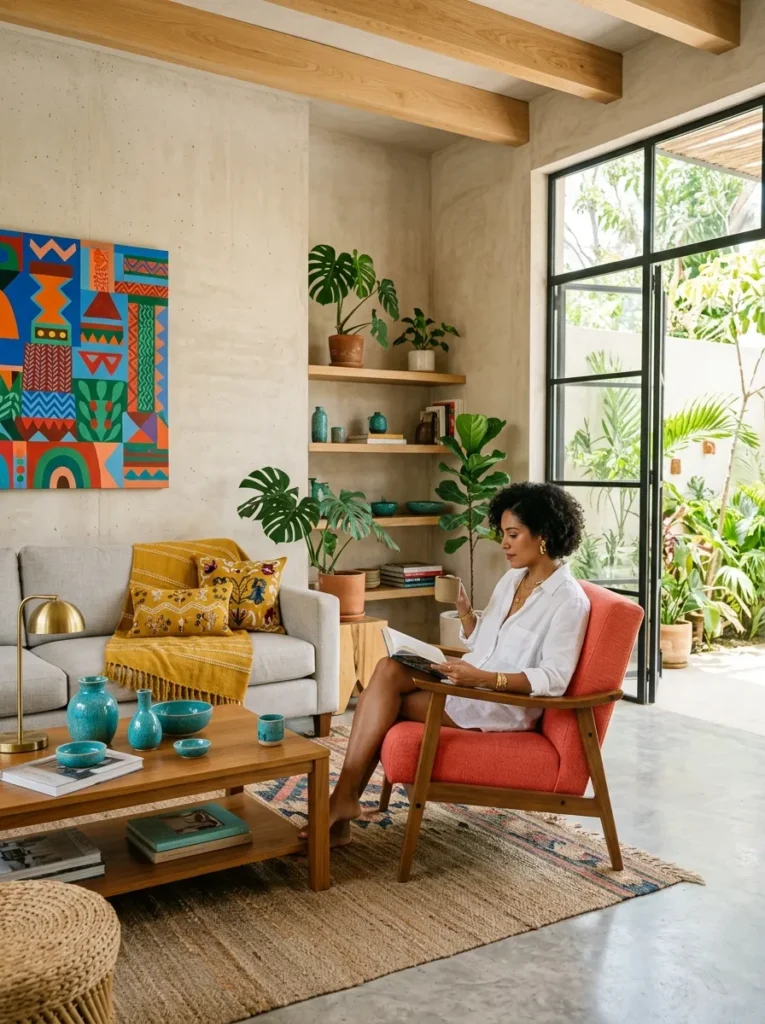
- Adds instant personality
- Works against neutral walls
- Great for accessories
- Repeat colors throughout room
- Avoid competing focal points
Mexican interiors often use saturated color strategically rather than covering every surface. Cobalt blue, turquoise, mustard, coral, green, and red can appear through pillows, artwork, cabinets, ceramics, or rugs. Choose one dominant accent and repeat it two or three times. This creates visual connection without making room chaotic. If furniture already has strong color, keep smaller accessories quieter. Bold accents work especially well when surrounding materials remain natural.
4. Handmade Talavera Tiles
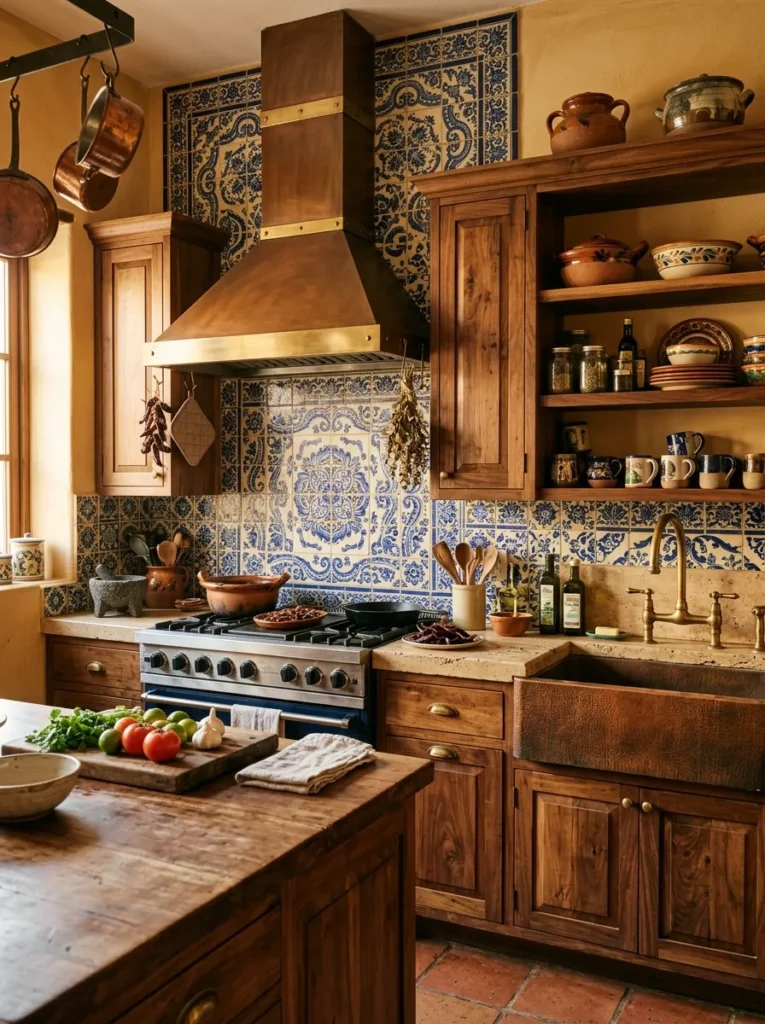
- Adds artisan visual character
- Works in kitchens
- Great for bathrooms
- Seal grout properly
- Clean glazed surfaces gently
Handmade Talavera tiles remain strong choice for adding Mexican craftsmanship to modern spaces. Use them on backsplashes, shower walls, stair risers, fireplace surrounds, or small decorative sections. Because patterns can be visually intense, pair detailed tile with simpler cabinetry and countertops. Handmade pieces may vary slightly in size and color, which adds character but requires experienced installation. Maintain grout and clean glazed surfaces with gentle products. A small accent zone can deliver impact without large renovation budget.
5. Natural Wood Furniture
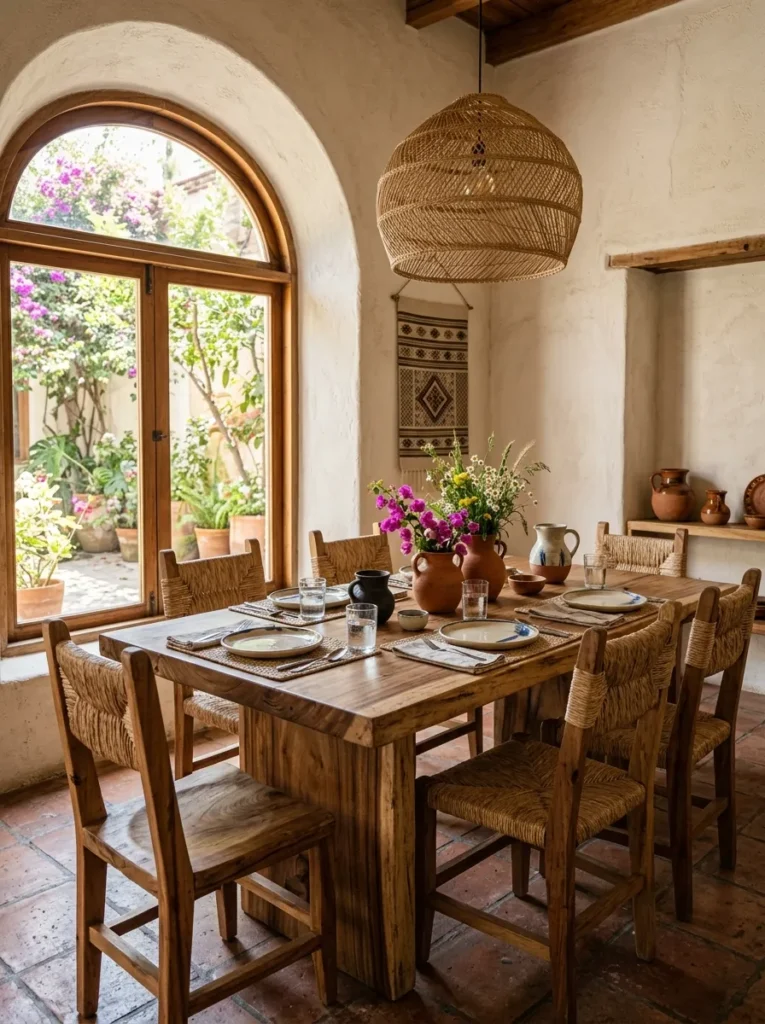
- Adds warmth and texture
- Works across design styles
- Great with colorful walls
- Choose durable solid wood
- Protect surfaces from moisture
Natural wood furniture creates balance against bright Mexican colors and patterned surfaces. Look for visible grain, carved details, rustic finishes, or simple handmade forms. Wood dining tables, benches, consoles, stools, and cabinets can anchor colorful rooms without competing with tile or textiles. Mix wood tones carefully because too many unrelated finishes can make room feel fragmented. For budget decorating, secondhand solid wood furniture often offers better character than inexpensive new pieces.
6. Woven Fiber Textures
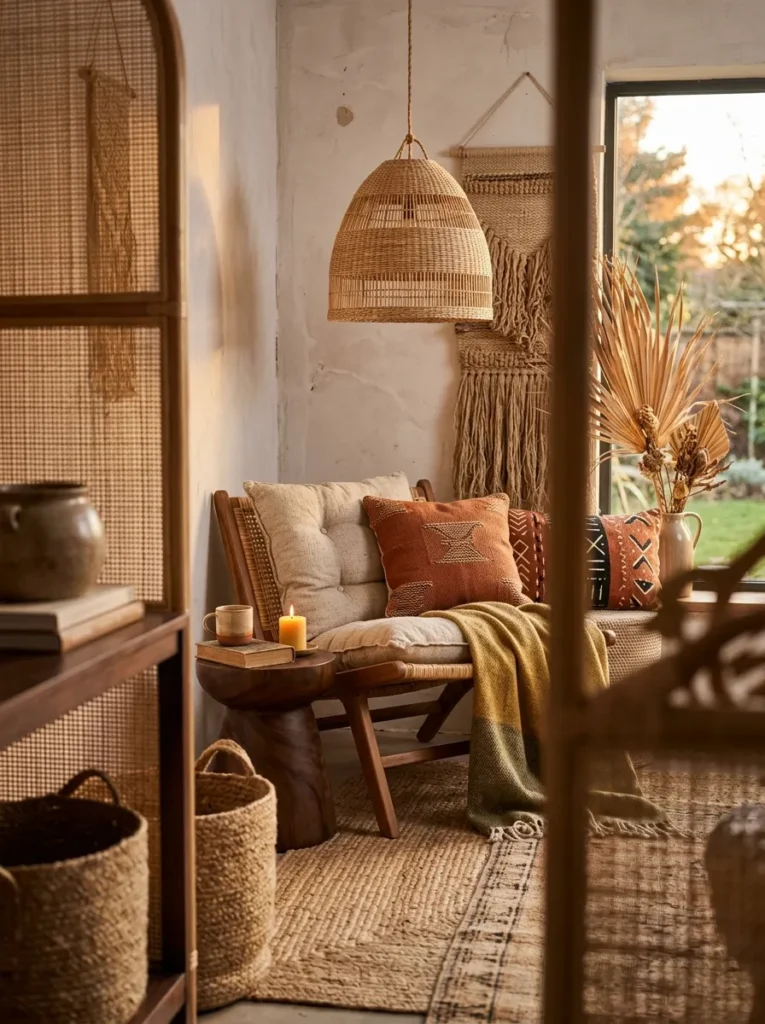
- Adds tactile natural warmth
- Works in every room
- Great for rentals
- Layer baskets and textiles
- Keep fibers away from moisture
Woven fibers bring softness to rooms filled with harder materials such as tile, stone, wood, and iron. Use jute rugs, woven baskets, cane chairs, rope pendants, or natural wall hangings. These pieces work particularly well in rentals because they require little permanent alteration. Mix textures rather than buying multiple identical items. Natural fibers can absorb moisture, so avoid placing delicate baskets or textiles in damp areas. Regular gentle dusting keeps woven surfaces looking fresh.
7. Rustic Clay Pottery
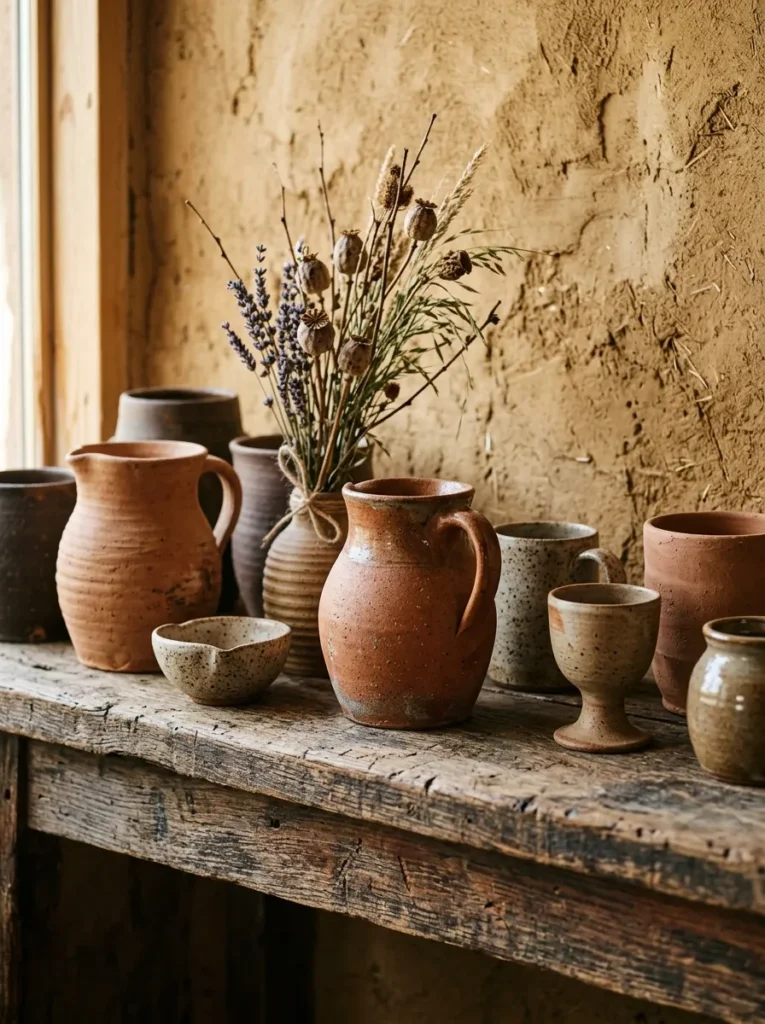
- Adds handmade earthy character
- Works on open shelves
- Great for plants
- Choose varied shapes
- Protect furniture surfaces
Rustic clay pottery introduces warm, imperfect texture that suits Mexican interiors naturally. Use clay vases, planters, bowls, pitchers, and vessels on shelves, tables, mantels, and entry consoles. Mix different shapes rather than creating perfectly matching sets. Unglazed pottery can absorb moisture, so use saucers beneath planters and protective pads beneath vessels. Pair clay with wood, woven textiles, and warm plaster walls. A single oversized vessel can become stronger focal point than many tiny accessories.
8. Natural Stone Details

- Adds grounded architectural texture
- Works around fireplaces
- Great for patios
- Choose durable local stone
- Seal porous surfaces appropriately
Natural stone adds visual weight and connects Mexican interiors with earthy outdoor landscapes. Use stone around fireplaces, accent walls, floors, columns, or kitchen details. Warm limestone, travertine, slate, and irregular stone can all work depending on regional style. Choose finish based on location and maintenance needs. Porous stone may require sealing, especially in kitchens and bathrooms. Balance heavy stone with textiles, wood, and softer furnishings so room remains comfortable.
9. Handcrafted Folk Art
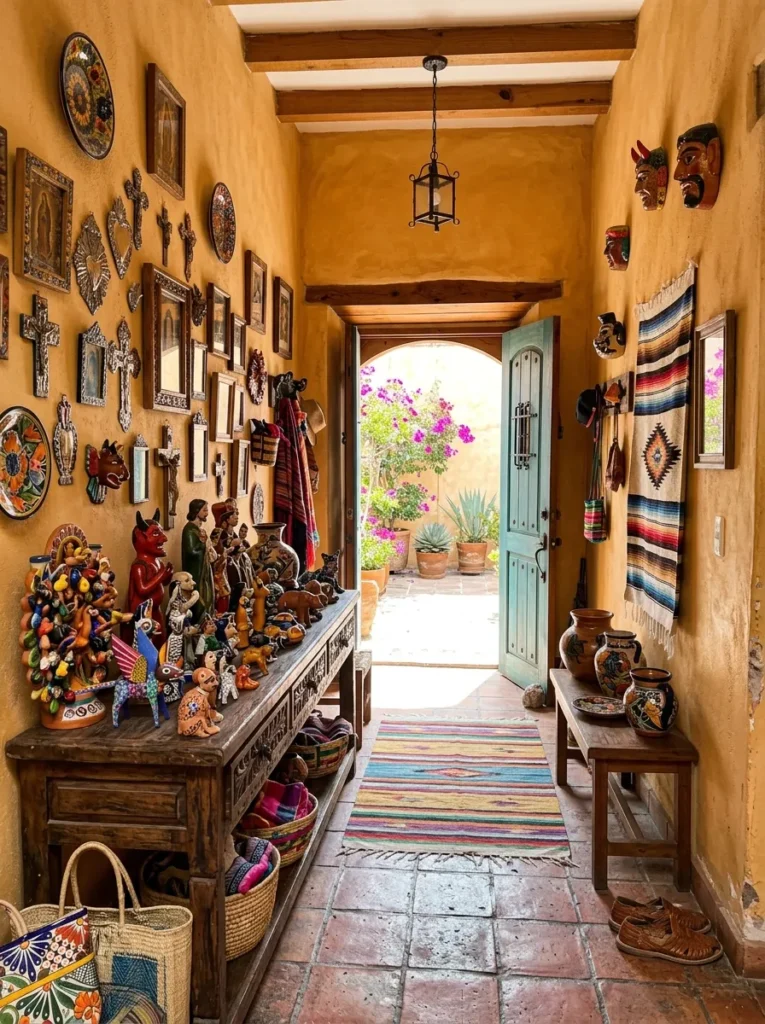
- Adds personal cultural character
- Works on gallery walls
- Great for eclectic rooms
- Mix old and new
- Protect delicate pieces
Handcrafted folk art can make Mexican interior feel collected rather than mass-produced. Painted wood figures, masks, embroidered art, ceramics, carved pieces, and textile artwork all offer possibilities. Choose pieces with personal meaning instead of filling every wall with themed objects. Mix folk art with modern frames or contemporary furniture for updated look. Keep delicate handmade pieces away from strong sunlight and humidity. One memorable artwork can anchor an entire room.
10. Limewashed Plaster Walls
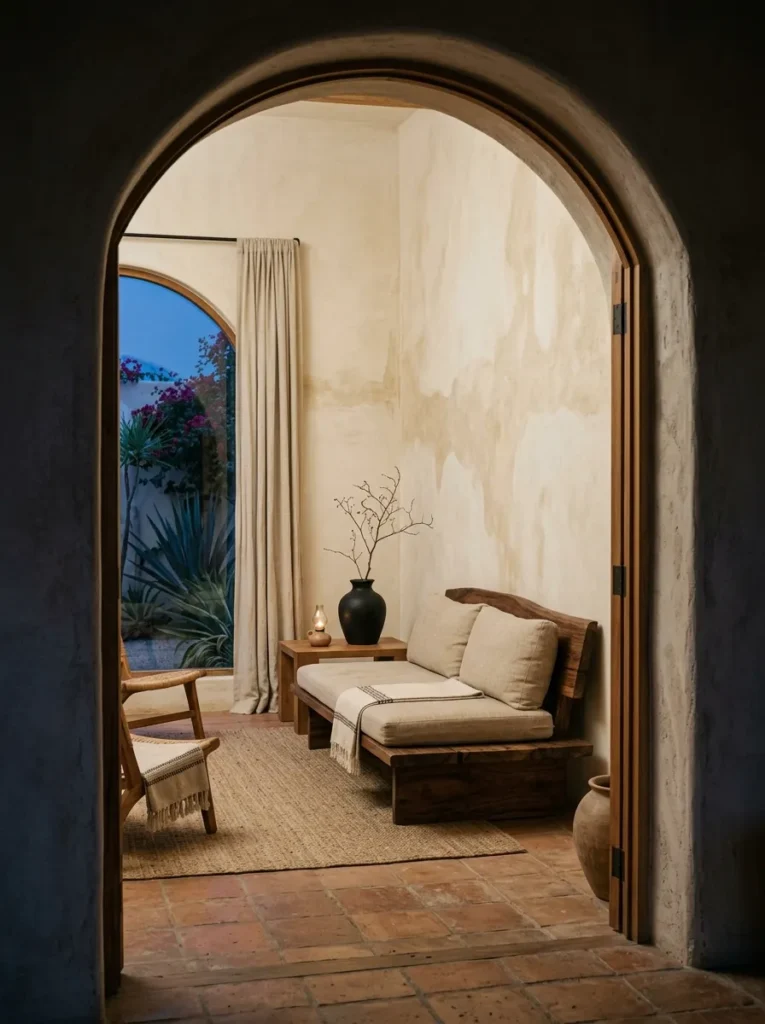
- Creates soft aged texture
- Works with rustic architecture
- Great for warm neutrals
- Test finish before applying
- Repair marks naturally
Limewashed plaster walls bring subtle movement and old-world character without relying on strong patterns. Cream, sand, pale terracotta, and warm beige finishes work especially well with Mexican-inspired furniture and ceramics. Uneven tonal variation gives walls handcrafted appearance. Test finish on large sample area because limewash changes as it dries. Minor imperfections often enhance look rather than requiring perfect correction. Keep furniture silhouettes relatively simple so wall texture remains visible.
11. Colorful Eclectic Styling
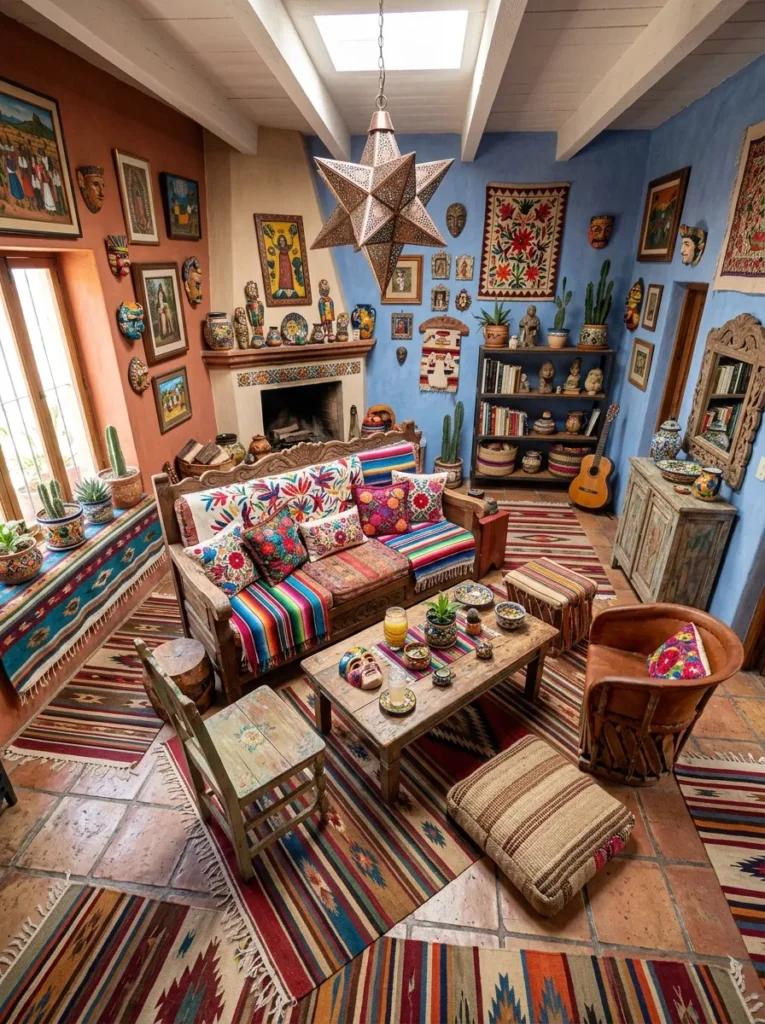
- Mixes patterns confidently
- Works in collected homes
- Great for creative personalities
- Repeat colors for cohesion
- Leave some visual breathing room
Colorful eclectic Mexican styling combines textiles, ceramics, art, furniture, and patterns without requiring everything to match. Choose a color thread that appears throughout room to hold different pieces together. Mix stripes, florals, geometric motifs, and handmade textures while keeping one or two surfaces quiet. Thrifted pieces work especially well because slight differences add personality. Avoid filling every corner. Negative space gives colorful collections room to breathe. For additional layout and architectural inspiration, don’t miss our creative Mexican Home Decor Ideas.
12. Indoor Outdoor Living
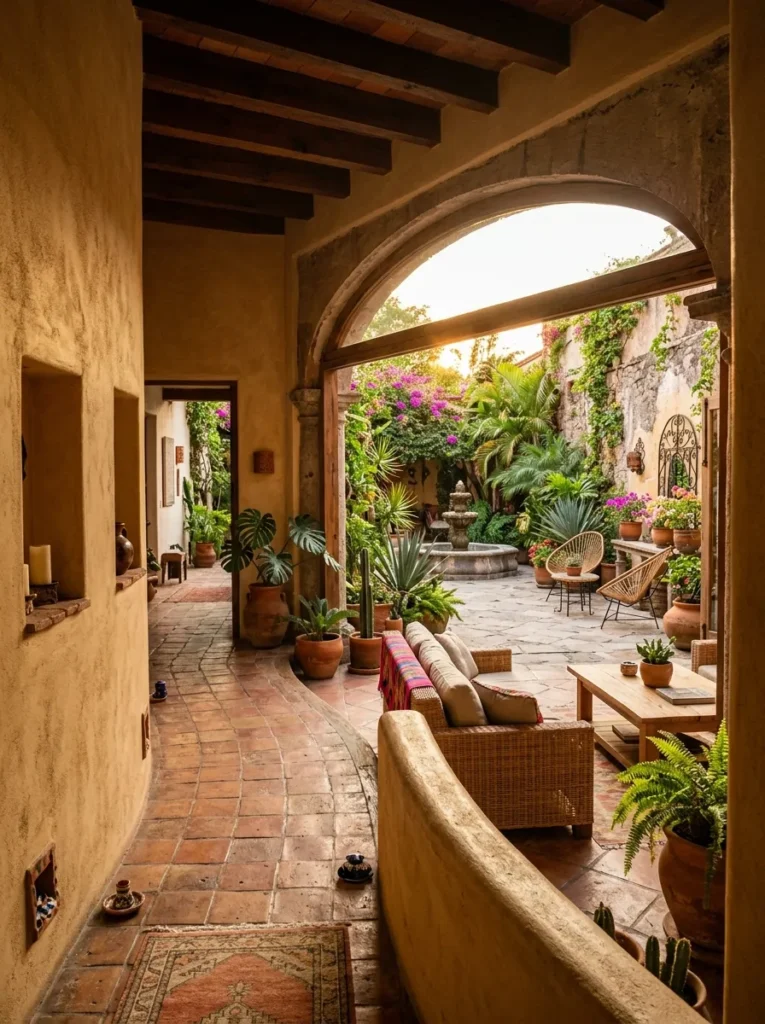
- Blurs interior exterior boundaries
- Works in warm climates
- Great with large windows
- Choose weather-resistant materials outdoors
- Repeat materials across spaces
Indoor-outdoor living fits Mexican design naturally because patios, courtyards, gardens, and shaded terraces often feel like extensions of interior rooms. Connect spaces through similar tile, wood, textiles, plants, or color. Large windows and sliding doors can strengthen visual connection. Outdoor furniture should use weather-resistant materials suitable for local conditions. Keep indoor textiles protected from direct weather exposure. Even apartments can create similar effect with plants, natural fibers, and large windows.
13. Hacienda Inspired Details

- Adds historic architectural warmth
- Works in modern homes
- Great around fireplaces
- Use details selectively
- Balance with simple furniture
Hacienda-inspired details can include arches, plaster walls, exposed beams, iron lighting, terracotta, carved wood, and substantial fireplaces. You do not need every element to create effect. Choose one architectural feature and support it with smaller materials. For modern homes, pair rustic details with clean-lined sofas or contemporary lighting. Avoid making room feel like historical replica. The goal is warmth, craftsmanship, and architectural depth.
14. Rustic Wood Beams
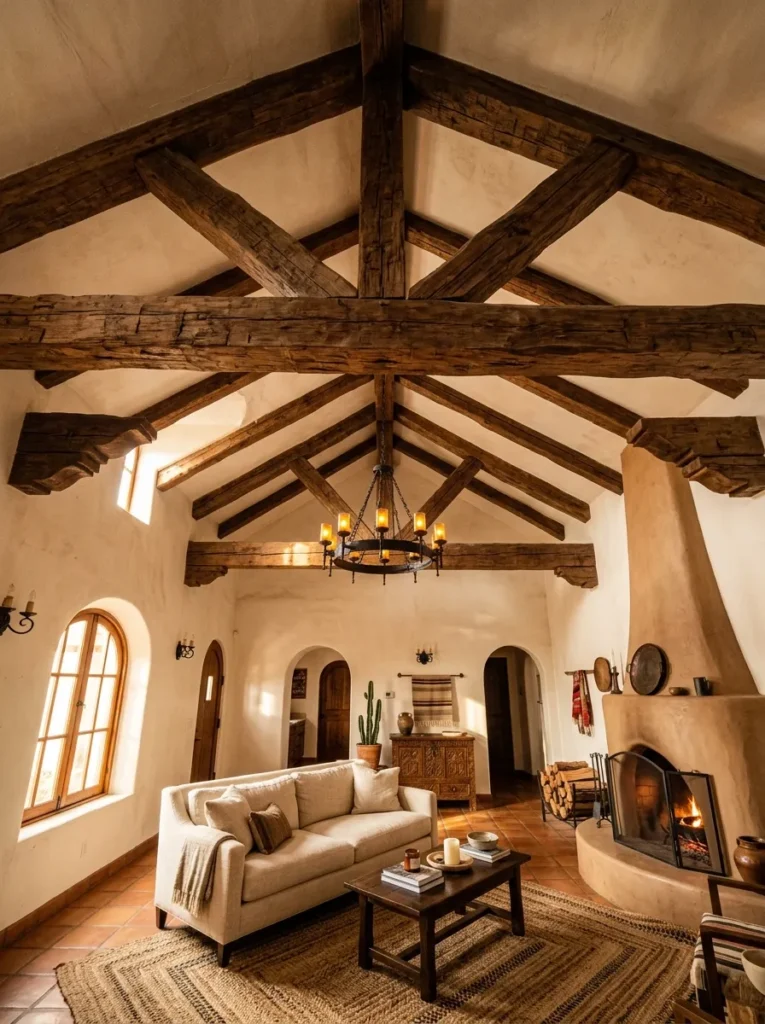
- Draws attention upward
- Works with high ceilings
- Great with plaster walls
- Inspect reclaimed wood carefully
- Maintain finish as needed
Rustic wood beams bring immediate architectural character to living rooms, kitchens, bedrooms, and dining areas. Dark beams create dramatic contrast against warm plaster, while lighter wood gives more contemporary feel. Reclaimed wood adds authenticity but should be checked for pests, structural damage, and moisture problems before installation. Faux beams can create similar visual effect when structural remodeling is not practical. Keep other wood finishes coordinated so ceiling does not feel disconnected.
15. Statement Ceramic Tiles

- Creates memorable focal point
- Works behind ranges
- Great for bathrooms
- Limit surrounding patterns
- Clean surfaces regularly
Statement ceramic tiles allow one small area to carry major visual impact. Use bold Mexican-inspired pattern behind cooktop, around fireplace, inside shower, or on vanity wall. Pair highly decorative tile with simple cabinetry and neutral surfaces. This strategy can reduce material costs compared with covering an entire room. Choose tiles appropriate for location, especially where water or heat exposure occurs. Regular gentle cleaning keeps decorative glaze looking vibrant. For more cohesive styling advice and decor inspiration, check out our roundup of Mexican Apartment Decor Ideas for Small Cozy Spaces.
16. Artisan Textiles
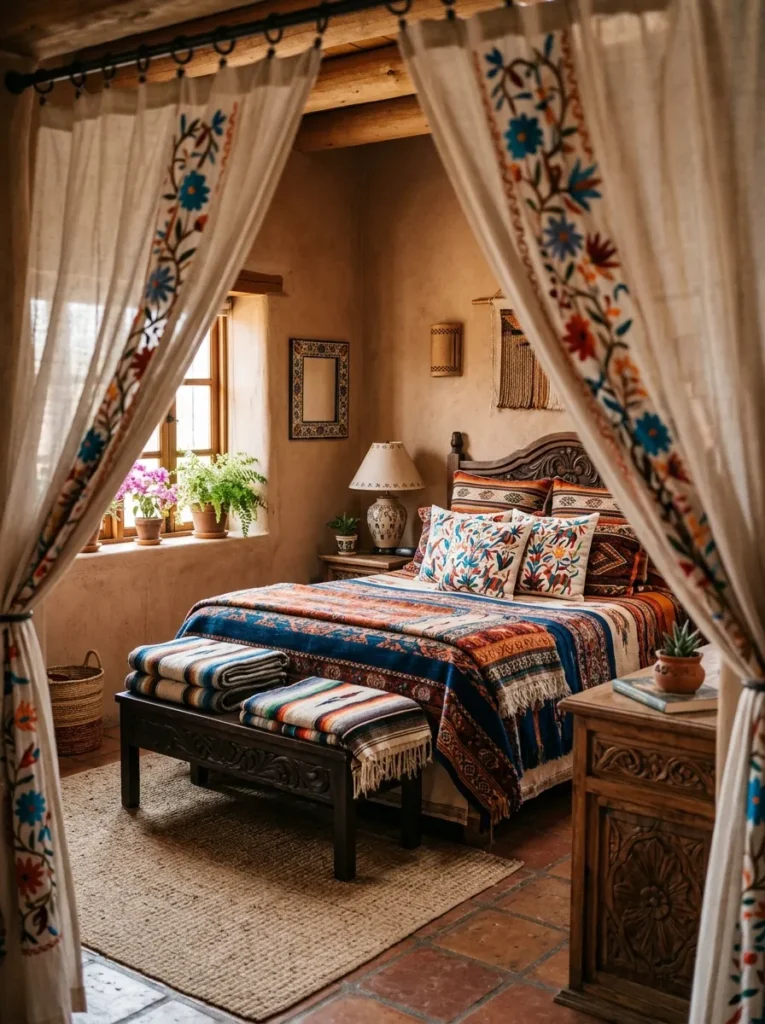
- Adds handcrafted softness
- Works on sofas
- Great for bedrooms
- Mix texture with pattern
- Follow care instructions carefully
Artisan textiles can transform neutral room through blankets, pillows, runners, curtains, and upholstery. Look for handwoven cotton, embroidered fabrics, striped blankets, and traditional-inspired patterns. One statement textile can become focal point while simpler fabrics support it. Handmade pieces may need gentler washing than mass-produced fabrics, so check care instructions before cleaning. Rotate textiles to prevent room feeling visually static. This trend also works well for renters because fabrics require no permanent changes.
17. Mexican Patterned Rugs
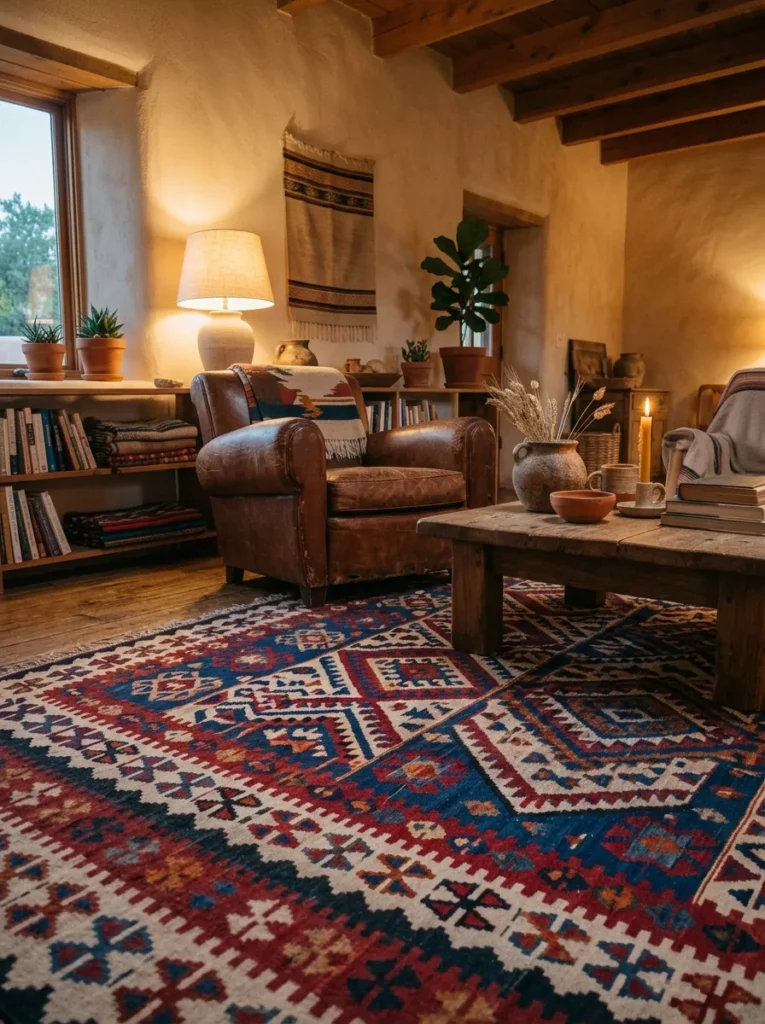
- Grounds colorful furniture
- Works in living rooms
- Great for open layouts
- Choose durable fibers
- Vacuum according to material
Mexican patterned rugs provide color and structure while defining seating or dining zones. Geometric, striped, tribal-inspired, and handwoven designs can all complement Mexican interiors. Choose rug size carefully so furniture sits securely within defined area. Bold rug works best when nearby upholstery is relatively simple. Natural wool and cotton require appropriate care, while performance fibers may be better for high-traffic households. Use rug pad to reduce slipping and protect flooring.
18. Wrought Iron Lighting
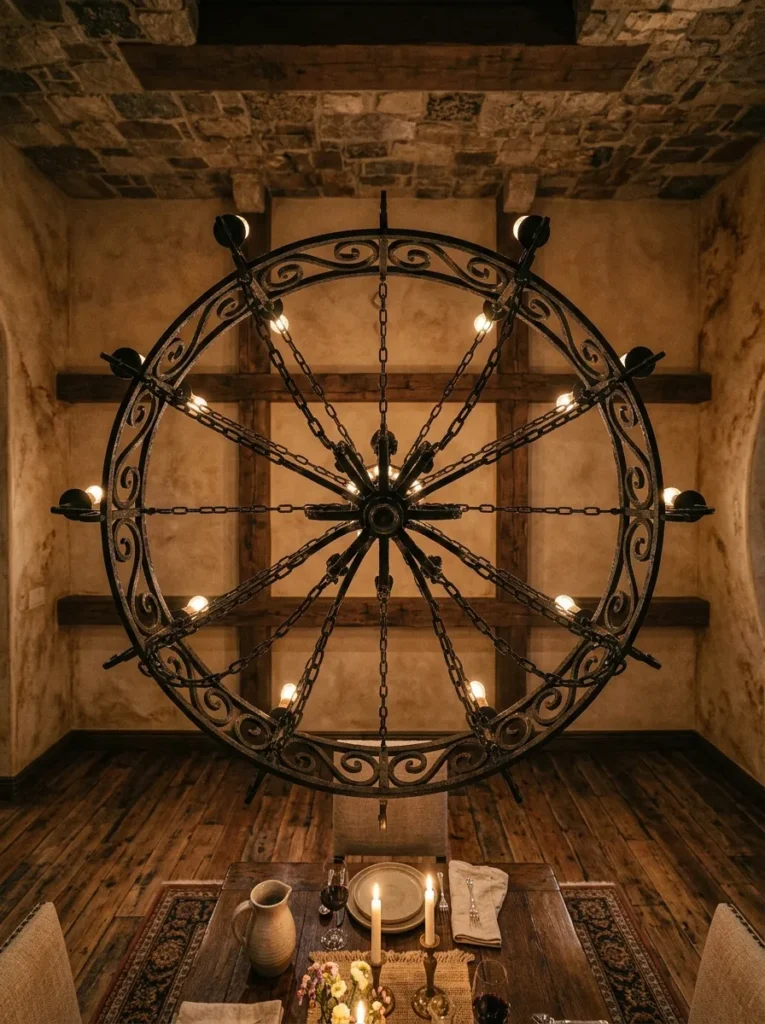
- Adds Spanish architectural character
- Works in dining rooms
- Great with wood beams
- Choose proper fixture scale
- Dust detailed surfaces regularly
Wrought iron lighting brings dark sculptural contrast to warm Mexican interiors. Chandeliers, wall sconces, pendants, and lanterns can all reinforce hacienda-inspired atmosphere. Pair iron fixtures with wood, terracotta, plaster, and natural stone for cohesive material mix. Choose fixture size based on room dimensions rather than buying oversized design simply because it looks dramatic. Keep iron clean and inspect outdoor fixtures for corrosion. Warm bulbs can emphasize surrounding earthy materials.
19. Curved Architectural Details

- Softens strong room geometry
- Works in doorways
- Great for modern homes
- Highlight curves with lighting
- Keep surrounding lines simple
Curved architecture adds softness while referencing Spanish and hacienda influences. Arched doorways, rounded niches, curved shelves, and barrel-style openings can become subtle architectural focal points. In modern homes, one curved opening may be enough to establish character. Highlight shape with warm lighting or contrasting plaster. Avoid filling archway with excessive decor because its shape already provides visual interest. Curves can also make narrow transition areas feel more welcoming.
20. Modern Minimalist Mexican
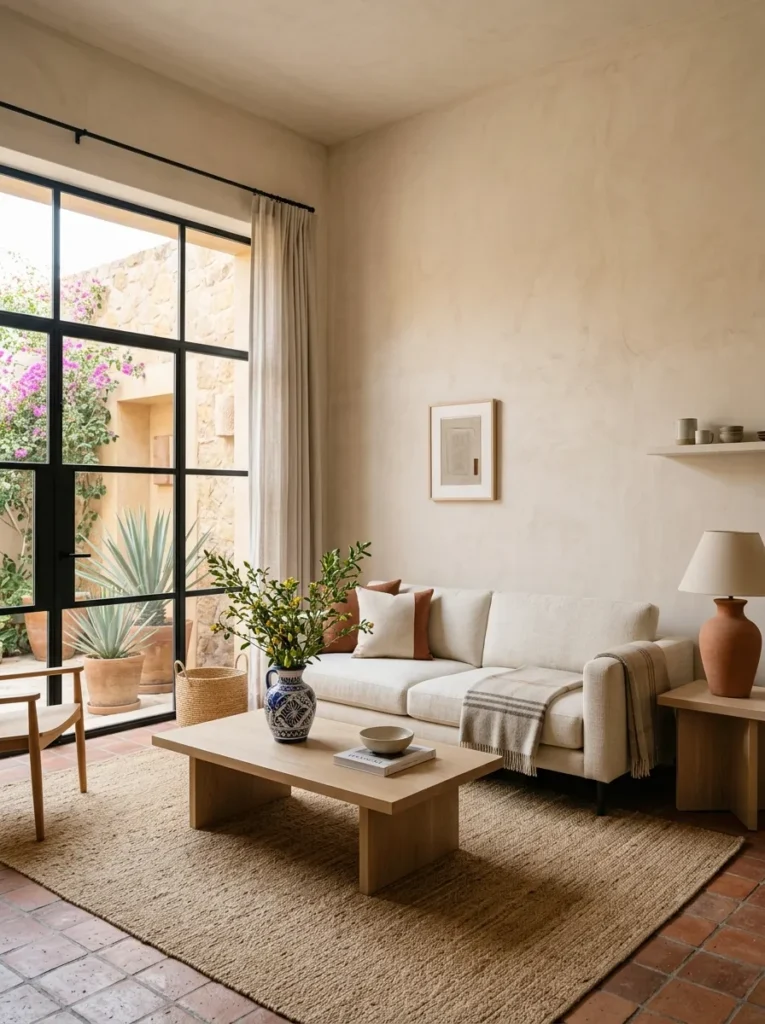
- Combines clean lines and warmth
- Works in small homes
- Great for neutral interiors
- Use fewer statement pieces
- Prioritize natural materials
Modern minimalist Mexican style strips look down to strongest elements: natural wood, terracotta, handmade ceramics, warm plaster, woven texture, and restrained color. Keep furniture simple and choose one or two artisan focal points. Neutral walls allow craftsmanship to stand out. Avoid excessive decorative objects because minimalism depends on visual breathing room. This style works particularly well in apartments where too many rustic pieces can make space feel crowded.
21. Earthy Green Accents
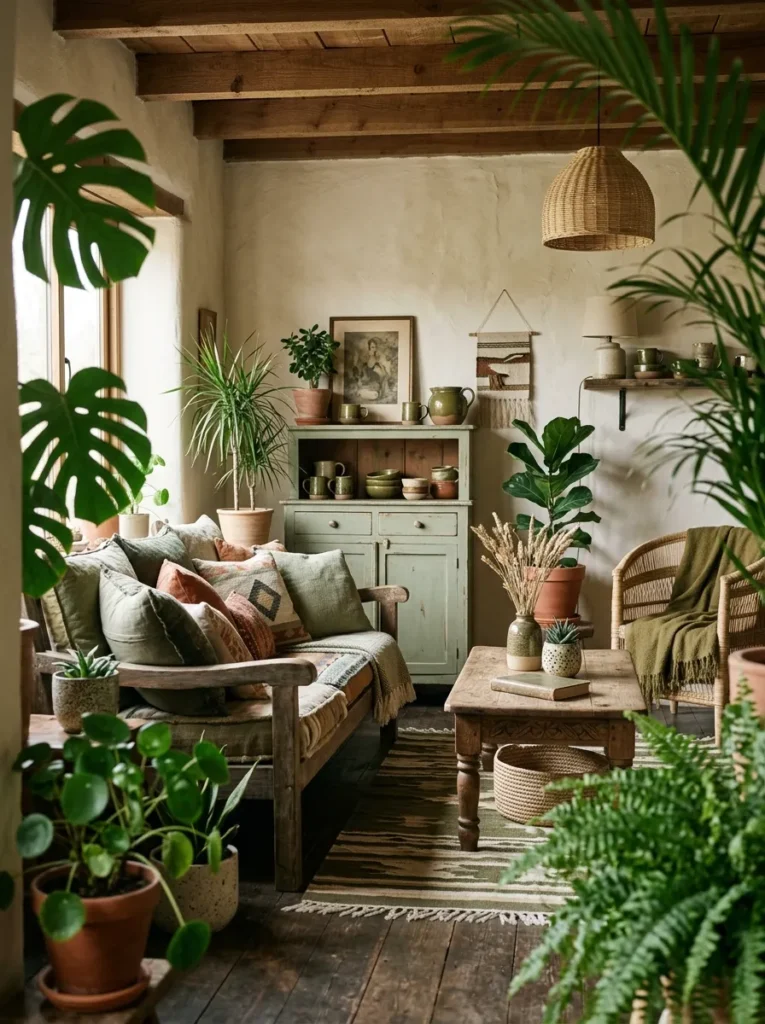
- Brings natural color indoors
- Works with terracotta
- Great for plants
- Repeat green through textiles
- Avoid too many shades
Earthy greens create natural bridge between Mexican interiors and outdoor landscapes. Olive, sage, cactus green, moss, and muted emerald can work through cabinets, pillows, rugs, ceramics, and plants. Pair green with terracotta and warm cream for balanced palette. Choose one main green and repeat it across room instead of mixing many unrelated shades. Natural plants can reinforce color while adding texture. Keep high-maintenance plants away from spaces without sufficient daylight.
22. Cobalt Blue Accents
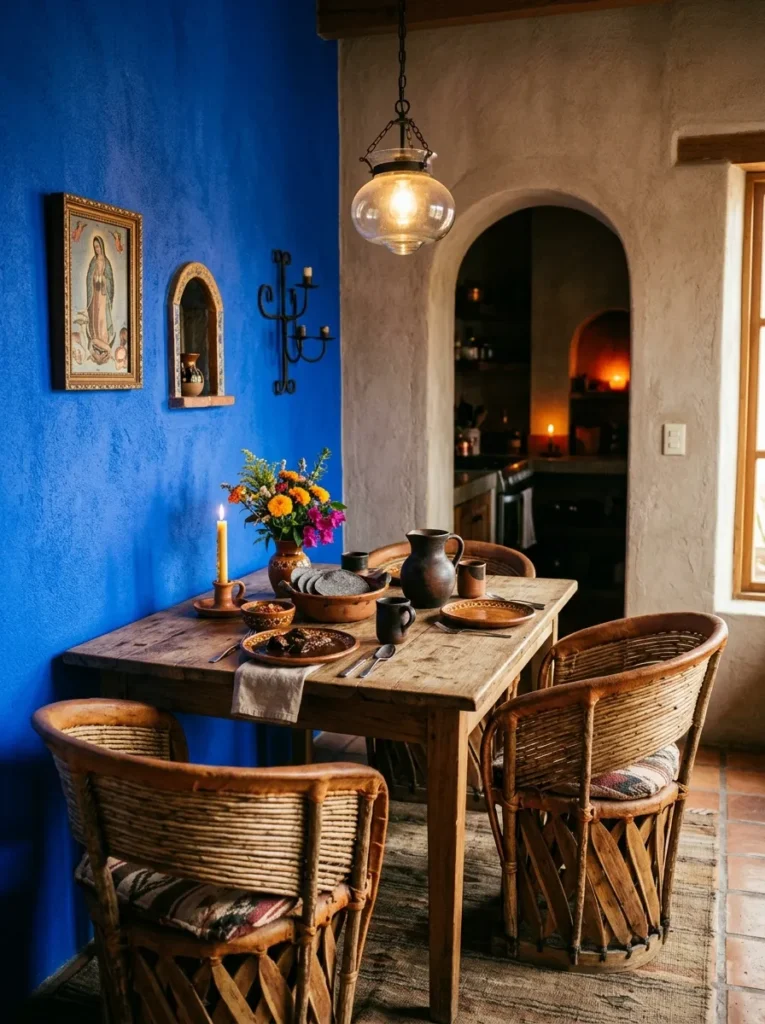
- Adds vivid Mexican color
- Works with white walls
- Great for ceramics
- Repeat blue strategically
- Balance with warm tones
Cobalt blue provides strong contrast against warm neutral and terracotta backgrounds. Use it through Talavera ceramics, tiles, pillows, rugs, artwork, or painted furniture. Repeat blue in several small areas so accent feels intentional rather than random. Pair cobalt with cream, wood, terracotta, or mustard for warmth. In small rooms, use blue through accessories rather than large walls. Keep surrounding patterns relatively restrained when cobalt tile is already prominent.
23. Warm Ambient Lighting
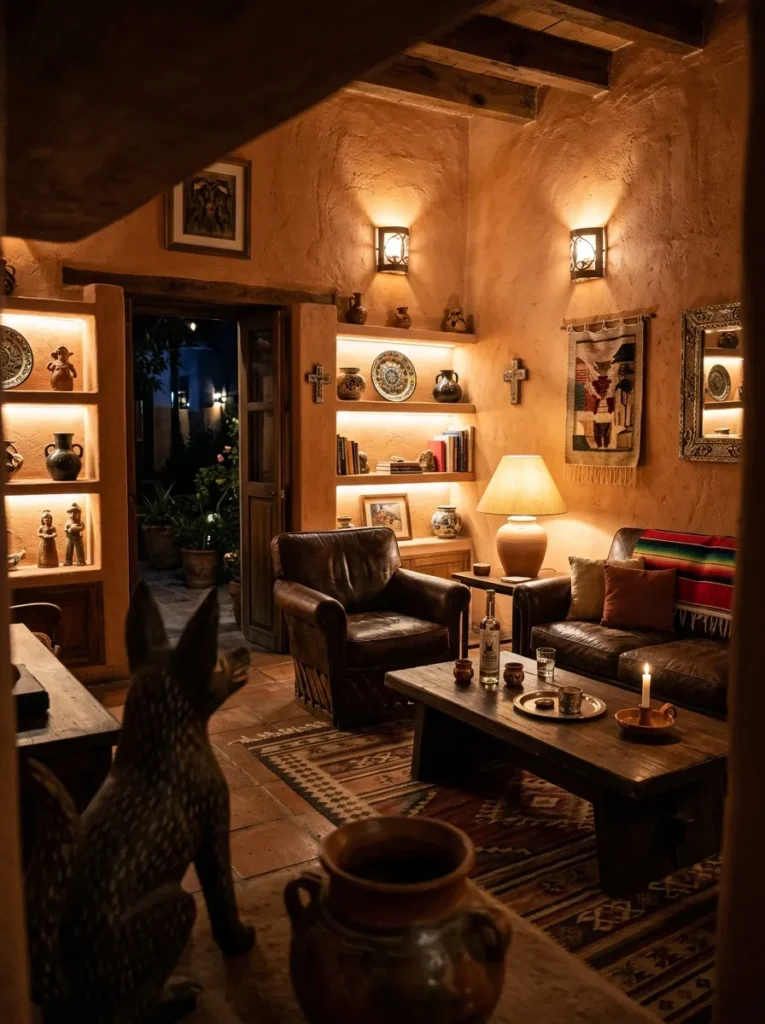
- Creates cozy evening atmosphere
- Works across every room
- Great with earthy materials
- Choose warm bulb temperatures
- Layer multiple light sources
Warm lighting can dramatically change how Mexican materials appear after sunset. Use pendant lights, sconces, table lamps, floor lamps, and candles to create several levels of illumination. Warm bulbs complement terracotta, wood, woven fibers, and brass especially well. Avoid relying on one bright ceiling fixture because it can flatten room texture. Place lamps near seating, artwork, and architectural features to create visual depth. Keep fixture finishes coordinated without requiring identical designs.
24. Textured Accent Walls
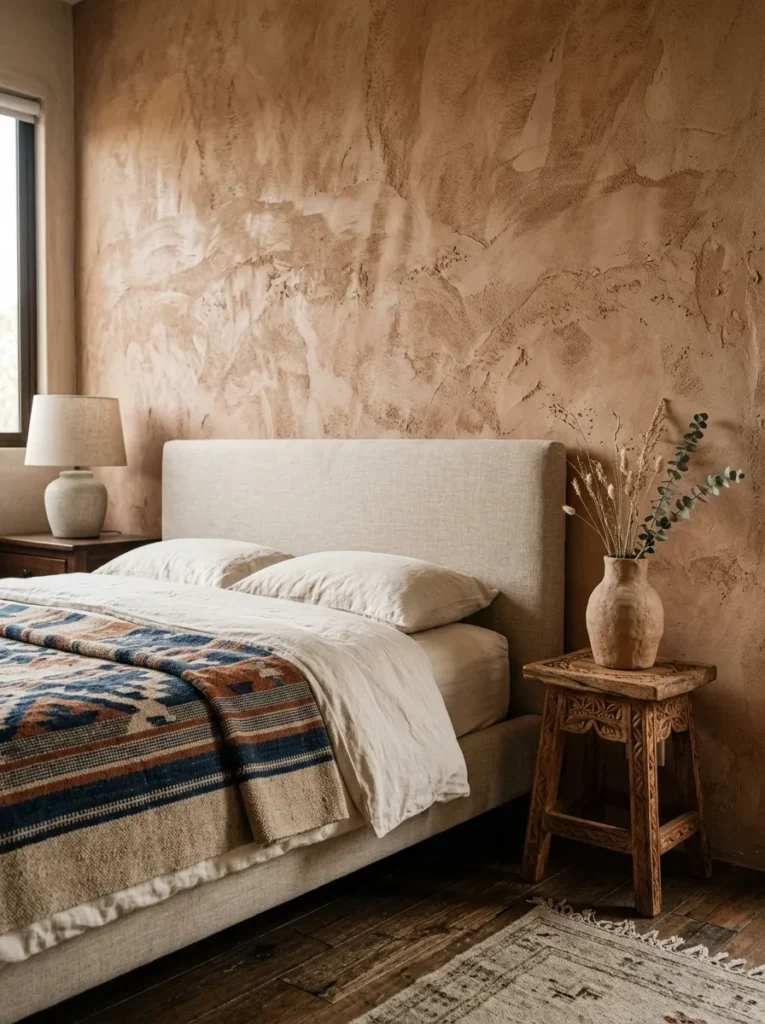
- Adds depth without bold color
- Works behind beds
- Great in living rooms
- Test materials before installation
- Dust textured surfaces carefully
Textured walls can introduce Mexican character through plaster, limewash, clay finish, stone, tile, or wood. Choose texture based on room function and maintenance requirements. A textured accent wall behind sofa or bed can become focal point without overwhelming entire room. In rental spaces, removable textured wallpaper may offer easier alternative. Consider lighting because side lighting can emphasize texture dramatically. Keep furniture against textured wall relatively simple to preserve visual clarity.
25. Mixed Traditional Modern
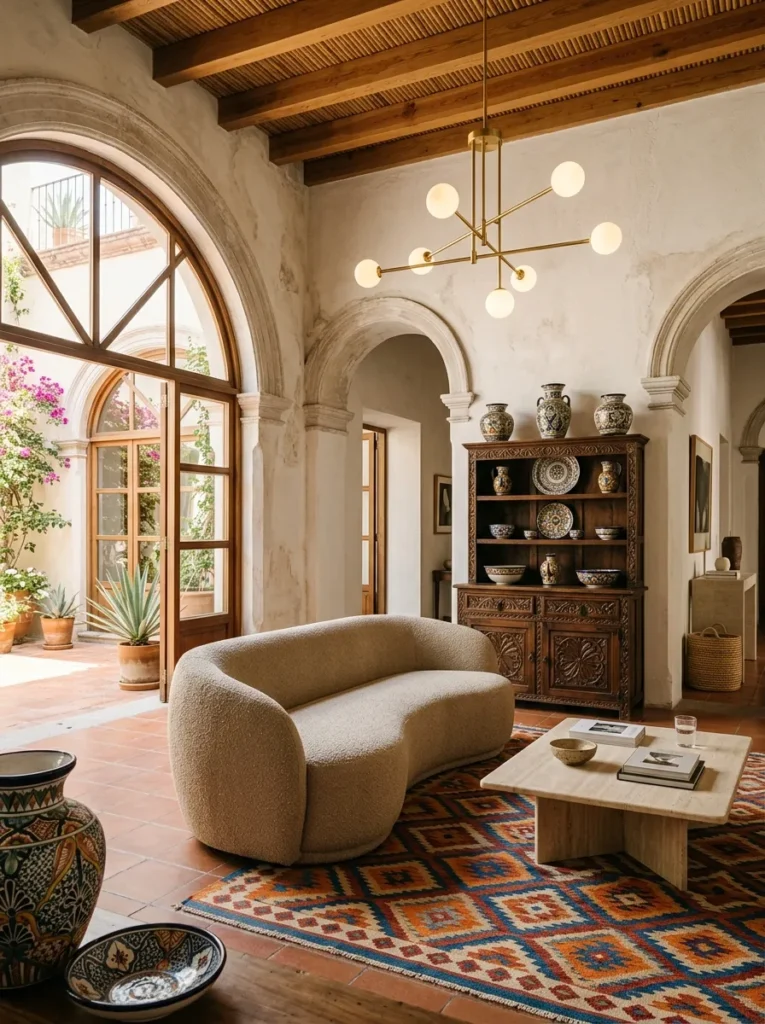
- Blends old and new
- Works in updated homes
- Great for collected interiors
- Repeat materials for cohesion
- Avoid competing focal points
Mixed traditional-modern styling may be strongest Mexican interior trend because it allows heritage materials to coexist with current lifestyles. Pair rustic wood table with modern chairs, Talavera tile with streamlined cabinetry, or antique folk art with contemporary sofa. Repeat colors and natural materials to connect different periods. Avoid making every piece historically inspired. One or two traditional anchors usually provide enough character. This approach works especially well when existing home architecture is modern but you want warmer, handcrafted atmosphere.
Mexican Interior Design Trends FAQ
1. What are popular Mexican Interior Design Trends?
Warm terracotta, handmade Talavera tile, natural wood, woven fibers, earthy colors, artisan textiles, rustic pottery, wrought iron, arches, and mixed traditional-modern styling remain strong choices.
2. How can I add Mexican style without remodeling?
Start with textiles, ceramics, rugs, artwork, lighting, baskets, plants, and painted accents. These smaller changes can introduce Mexican character without permanent construction.
3. What colors define Mexican interior design?
Terracotta, turquoise, cobalt blue, warm cream, mustard, earthy green, coral, natural brown, and clay tones are common. Modern versions often use fewer saturated colors.
4. Can Mexican interior design be minimalist?
Yes. Modern minimalist Mexican rooms focus on natural materials, warm neutrals, handmade ceramics, simple furniture, and one or two strong artisan elements.
5. How do I mix Mexican style with modern furniture?
Keep modern furniture clean-lined and introduce Mexican character through tile, rugs, textiles, wood, pottery, lighting, or artwork. Repeat colors to connect both styles.
6. What is easiest Mexican design trend for renters?
Textiles, woven baskets, ceramics, artwork, rugs, plants, and warm lighting are easiest. They add texture and color without changing walls, floors, or permanent fixtures.
Make Mexican Style Feel Like Yours
Mexican interior design does not need to follow one strict formula. Warm terracotta walls can create dramatic foundation, while earthy neutrals offer quieter approach. Talavera tile, artisan textiles, woven fibers, clay pottery, and folk art can then add layers based on personality and budget.
Real homes benefit from mixing old and new. A modern sofa can work beautifully beside rustic wood table. Contemporary kitchen can gain character from handmade tile. Minimalist bedroom can feel warmer with one woven blanket and terracotta vessel. These combinations often feel more authentic than buying every item from same collection.
Start with materials you genuinely love, then build around them. Repeat colors, balance bold patterns with quiet surfaces, and leave enough open space for room to breathe. Whether you prefer colorful eclectic rooms or modern minimalist Mexican style, strongest result will feel connected to your everyday life.
Subscribe to our weekly newsletter for more home decor inspiration, DIY tips, and styling advice.